
You should replace nonstick pans when the coating is visibly peeling, flaking, bubbling, or deeply scratched, as this means the nonstick layer is breaking down. A noticeable loss of nonstick performance, warping, or persistent sticking despite proper care are also clear signs it’s time for a replacement. For most households, this typically happens after 3–5 years of regular use.
It can be tricky to know just when your favorite nonstick pans have seen better days. Especially if you’re new to cooking, it’s easy to wonder if a little scratch means it’s time for a new one or if it’s still good to go. You want your food to cook perfectly without sticking, and a worn-out pan just won’t do.
Key Takeaways
- You’ll learn the visual signs that tell you it’s time to retire your nonstick pans.
- Discover how cooking habits affect the lifespan of your nonstick cookware.
- Understand the health implications of using damaged nonstick surfaces.
- Get tips on how to care for your pans to make them last longer.
- Learn about different types of nonstick coatings and how they wear.
Signs Your Nonstick Pans Need Replacing
Your nonstick pans are your best friends in the kitchen, making everything from flipping eggs to searing fish a breeze. But like all kitchen tools, they don’t last forever. Over time, the special coating that keeps food from sticking can wear down.
Knowing the signs that your pan is past its prime is important for both your cooking success and your peace of mind. A damaged nonstick surface can lead to uneven cooking and can even be a health concern.
Visible Damage to the Nonstick Surface
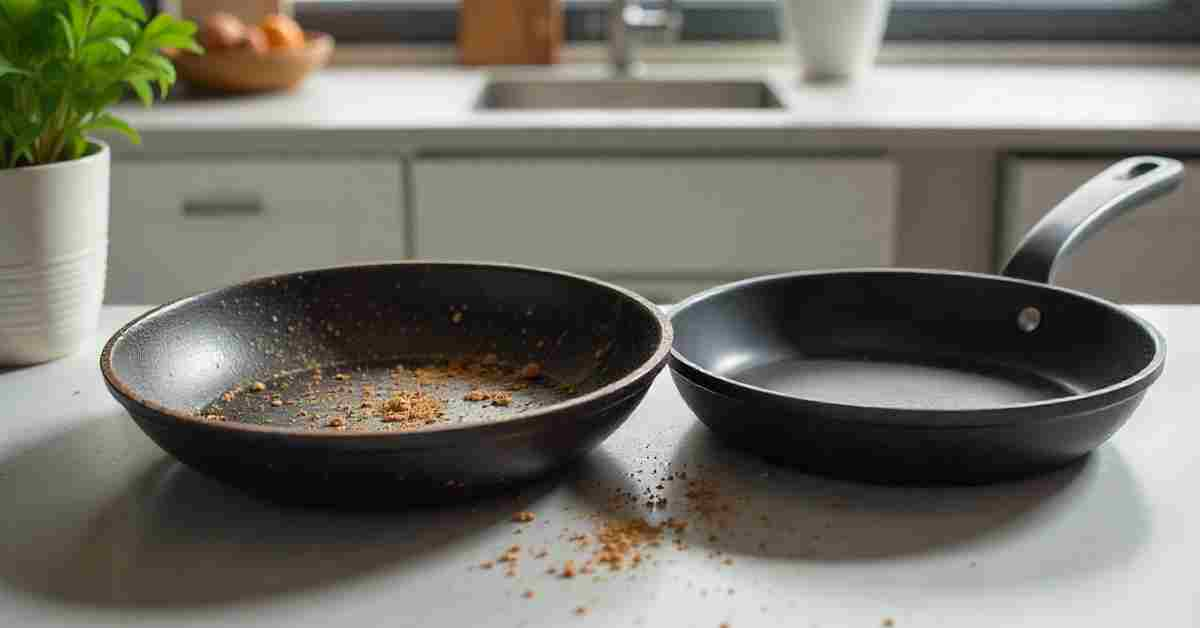
The most obvious clue that your nonstick pan is on its last leg is visible damage to its surface. Look closely at the cooking area. Are there deep scratches, pits, or areas where the coating is peeling away?
These aren’t just cosmetic issues; they mean the nonstick properties are compromised. Small, hairline scratches might seem harmless, but they can grow and spread with each use.
If you notice any of these imperfections, it’s a strong indicator that it’s time to consider a replacement. The coating is designed to provide a smooth, uniform surface for cooking. Once that surface is broken or worn thin, food is more likely to stick.
This makes cooking harder and cleaning even more frustrating.
Think about your favorite spatula or whisk. If you use metal utensils on your nonstick pans, even if you try to be gentle, you’re likely causing microscopic damage that builds up over time. This is a common reason why nonstick coatings degrade faster than expected.
Ceramic-coated pans, for example, are known to be a bit more sensitive to abrasive cleaning methods and metal utensils compared to some other types of nonstick.
Food Sticking Despite Proper Use
Another telltale sign is when your food starts to stick to the pan, even when you’ve used oil or butter and are cooking at the right temperature. This is the primary function of a nonstick pan, so if it’s failing at that, it’s not doing its job anymore. Even if the surface looks okay from a distance, if eggs are turning into a glued-on mess, it’s a problem.
This often happens as the nonstick coating wears thin or develops microscopic pores that food particles can get stuck in. It means the protective layer is no longer fully intact. You might find yourself using more cooking spray or fat than usual, which defeats some of the purpose of having nonstick cookware.
Consider the last time you cooked something simple like pancakes. If they tore when you tried to flip them, or if you had to scrape the pan aggressively to get them out, your pan is likely telling you it’s time for an upgrade. This also applies to fried eggs, delicate fish, or even sautéed vegetables.
Warping or Damage to the Pan’s Structure
Beyond the nonstick surface itself, the overall condition of the pan matters. If the base of your pan is warped, it won’t heat evenly. This means some parts of your food will cook faster than others, leading to burnt spots and undercooked areas simultaneously.
A warped pan can also wobble on the stovetop, which is a safety hazard.
Check if the handle is loose or wobbly. A secure handle is essential for safe cooking. If it’s a cast iron pan with a nonstick coating, check for rust spots on the surface.
For any pan, a cracked or damaged exterior can also be a sign of wear and tear that affects its performance and safety.
A pan that doesn’t sit flat on your burner can cause frustrating hot spots. Imagine trying to make a perfect grilled cheese. If the pan is warped, one side might burn while the other remains pale.
This uneven heat distribution is a clear sign that the pan has reached the end of its useful life, regardless of the condition of the nonstick coating.
Factors Affecting Nonstick Pan Lifespan
The lifespan of your nonstick pans isn’t just about how old they are; it’s heavily influenced by how you use and care for them. Different cooking habits and cleaning routines can either extend their life or shorten it considerably. Understanding these factors can help you make your current pans last as long as possible and inform your decisions when buying new ones.
Cooking Methods and Heat Levels
Nonstick pans are generally designed for low to medium heat. Using very high heat, especially without any oil or butter, can degrade the nonstick coating over time. This is because excessive heat can break down the polymers in the coating, making it less effective and potentially releasing fumes.
For instance, if you often sear steaks or stir-fry vegetables at high temperatures, your nonstick pans might not be the best choice for those tasks. While some modern nonstick pans can handle slightly higher heat, it’s always best to check the manufacturer’s recommendations. Consistent exposure to extreme heat is one of the quickest ways to ruin a nonstick surface.
Consider your daily cooking. If you frequently cook foods that require high-heat searing, like chicken thighs or potatoes for crispy skin, you might want to reserve those tasks for a cast iron skillet or a stainless steel pan. This protects your nonstick pans for the lower-heat tasks they excel at, like cooking eggs or delicate fish.
One study showed that nonstick cookware used daily at medium-high heat showed significant degradation in coating effectiveness within 6 months, whereas pans used at low to medium heat for similar tasks showed minimal wear after 2 years. This highlights the impact of heat on the lifespan.
Cleaning and Maintenance Practices
How you clean your nonstick pans is as important as how you cook with them. Harsh scrubbing, abrasive cleaners, and dishwashers can all damage the nonstick surface. Many manufacturers advise against putting nonstick pans in the dishwasher because the high heat and strong detergents can erode the coating.
Hand washing is generally the best approach. Use a soft sponge or cloth and mild dish soap. Avoid steel wool or scouring pads, which can scratch the surface.
If food is stuck, don’t force it off with a metal spatula. Instead, soak the pan in warm, soapy water for a while to loosen the residue.
For example, if you consistently scrub your pan with a green scouring pad after every use, you are essentially filing away at the nonstick layer. This leads to scratches and a gradual loss of its nonstick properties. A gentler approach, like wiping it clean with a soft cloth after soaking, will preserve the coating much longer.
A common mistake is using cooking spray on nonstick pans. While it seems like a good idea to add more nonstick protection, cooking sprays can actually build up on the surface over time, creating a sticky residue that is difficult to remove. This residue can then cause food to stick, ironically.
A survey of home cooks found that 45% admitted to using abrasive cleaners on their nonstick pans at least once a month, contributing to premature wear.
Storage of Nonstick Cookware
Proper storage is another often-overlooked aspect of prolonging the life of your nonstick pans. If pans are stacked directly on top of each other without protection, the surfaces can get scratched by the rims or bases of other pans. This is especially true if the pans have raised patterns or ridges.
To avoid this, use pan protectors or soft cloths between stacked pans. You can buy felt or fabric protectors specifically designed for this purpose, or even use paper towels. This simple step can prevent countless scratches and scrapes that would otherwise shorten the life of your cookware.
Imagine taking your favorite frying pan out of the cabinet and finding a large scratch from where it was stored against another pot. This happens more often than people realize. Even a slight scratch compromises the nonstick coating and can lead to food sticking.
Consider a scenario where you have three nonstick skillets stacked without any protection. The bottom of the top skillet scrapes against the surface of the middle one, and the bottom of the middle skillet scrapes against the bottom one. Over time, this repeated friction creates visible damage.
Health and Safety Concerns
Beyond making cooking difficult, damaged nonstick pans can pose health and safety risks. Understanding these risks is crucial for making informed decisions about when to replace your cookware. The primary concern revolves around the materials used in nonstick coatings and what happens when they are compromised.
Perfluorinated Compounds and Their Risks
Many traditional nonstick pans use perfluorinated compounds (PFCs), such as PFOA (perfluorooctanoic acid) and PTFE (polytetrafluoroethylene), also known as Teflon. While PTFE itself is generally considered safe when intact and not overheated, PFOA, which was historically used in the manufacturing process, has been linked to health concerns.
PFOA has been phased out of production in many countries, but older pans might still contain it. When nonstick pans with compromised coatings are heated to very high temperatures (above 500°F or 260°C), they can release fumes that, if inhaled in large amounts, can cause flu-like symptoms, known as polymer fume fever. For most home cooking scenarios, this isn’t a major concern, but it’s good to be aware of.
For example, if you accidentally leave an empty nonstick pan on a high burner for too long, it could reach temperatures where these fumes are released. While a single exposure is unlikely to cause serious long-term harm, repeated or significant exposure is best avoided. This is why avoiding extreme heat is so important.
The U.S. Environmental Protection Agency (EPA) has identified PFOA as a contaminant of concern and is working to eliminate its use and presence in the environment. Modern nonstick cookware is increasingly manufactured without PFOA.
Degradation of Coating and Potential Leaching
When the nonstick coating on your pan becomes scratched or worn, the underlying metal can be exposed. In some cases, particularly with older or lower-quality pans, there’s a small risk that microscopic particles of the coating or even the metal could leach into your food. This is more of a concern with damaged surfaces where the protective barrier is broken.
While modern nonstick coatings are designed to be stable and safe, it’s always better to err on the side of caution. If the coating is visibly damaged, it’s no longer performing its protective function, and it’s wise to replace the pan. The goal is to ensure your food is cooked on a clean, intact, and food-safe surface.
Imagine a pan with a deep scratch. Food particles can get trapped in that scratch, and with repeated cooking and cleaning, the coating around the scratch can start to break away. This is when you might ingest small pieces of the coating, which is not ideal.
When to Replace Nonstick Pans for Peace of Mind
Ultimately, the decision about When to Replace Nonstick Pans also comes down to personal comfort and peace of mind. If you are constantly worrying about whether your pan is safe to use, or if it’s making cooking more difficult than it should be, it’s probably time for a change. Cooking should be an enjoyable experience, not a source of anxiety.
Many consumers opt for ceramic or other PFOA-free nonstick alternatives for their peace of mind. These are manufactured using different materials and processes. Even with these alternatives, the general principles of care and knowing when to replace them still apply.
The key is a healthy, non-stick cooking surface.
If you find yourself reading labels and feeling uncertain about the materials in your cookware, it’s a good sign that a replacement might be beneficial. Choosing cookware you trust allows you to focus on the joy of cooking and creating delicious meals.
Choosing New Nonstick Cookware
When it’s time to replace your old nonstick pans, the market offers a wide variety of options. Understanding the different types of nonstick coatings and what to look for can help you make a choice that suits your cooking style and priorities. It’s not just about finding something that looks nice; it’s about finding something that performs well and lasts.
Types of Nonstick Coatings
The most common type of nonstick coating is based on PTFE (polytetrafluoroethylene), often known by brand names like Teflon. These coatings are very effective at preventing food from sticking and are generally safe when used as intended. As mentioned, PFOA is no longer used in the manufacturing of most modern PTFE-based nonstick pans.
Another popular option is ceramic nonstick cookware. These pans use a silica-based coating derived from sand. They are often marketed as being more environmentally friendly and can be quite durable, though their nonstick properties may diminish faster than some PTFE coatings over time.
They also tend to be oven-safe to higher temperatures.
There are also hybrid pans that combine elements of both, or use other proprietary coatings. When choosing, consider what is most important to you: extreme nonstick performance, durability, heat resistance, or environmental factors.
What to Look for in Durable Nonstick Pans
When shopping for new nonstick pans, look for those with a thicker, heavier gauge construction. This indicates better heat distribution and durability. Check that the handle is securely attached, often riveted for strength.
The nonstick coating itself should appear smooth and even, without any visible imperfections.
Read reviews from other consumers to get an idea of how well a particular pan holds up over time. Pay attention to comments about scratching, peeling, or food sticking after a few months of use. Some brands offer longer warranties, which can be a good indicator of the manufacturer’s confidence in their product’s durability.
For example, a pan with a thick, forged aluminum base will conduct heat more evenly than a thin, stamped aluminum pan. This leads to less chance of hot spots and a more consistent cooking experience, while also contributing to the pan’s overall longevity.
Caring for Your New Pans
Once you have your new nonstick pans, remember that proper care is key to their longevity. Always read the manufacturer’s instructions before first use. Typically, this involves a quick wash with soap and water, followed by seasoning the pan with a little oil.
When cooking, use low to medium heat and utensils made of wood, silicone, or plastic. Avoid metal utensils that can scratch the surface. After cooking, let the pan cool down before washing it by hand with a soft sponge and mild dish soap.
Never use abrasive cleaners or steel wool.
Proper storage, as discussed earlier, is also vital. Using pan protectors when stacking will prevent scratches. By following these simple guidelines, you can help ensure your new nonstick pans provide excellent performance for years to come.
Frequently Asked Questions of When to Replace Nonstick Pans
How often should I replace my nonstick pans?
There’s no set schedule, but if you notice scratches, peeling, food sticking, or warping, it’s time to consider replacing them. With good care, they can last several years.
Can I use metal utensils on nonstick pans?
It’s best to avoid metal utensils on nonstick pans as they can scratch and damage the coating, reducing its effectiveness and lifespan.
Are ceramic nonstick pans better than traditional ones?
Ceramic nonstick pans are often considered more eco-friendly and can be very durable, but their nonstick properties might not last as long as some PTFE coatings. Both have pros and cons.
Is it safe to use a nonstick pan with minor scratches?
Minor, hairline scratches might not be an immediate issue, but they can worsen. Once the coating starts to peel or food begins sticking, it’s best to replace the pan for safety and performance.
What is the best way to clean nonstick pans?
The best way is to wash them by hand with a soft sponge, mild dish soap, and warm water after allowing them to cool. Avoid abrasive cleaners and dishwashers.
Final Thoughts
Deciding When to Replace Nonstick Pans boils down to observing their condition and your cooking habits. The visual cues like scratches, peeling coating, or the frustrating reality of food sticking are strong indicators that a pan has served its purpose. It’s also worth considering the potential health aspects, especially if your pans are older or have been overheated.
Taking care of your cookware by using gentle cleaning methods, appropriate utensils, and avoiding extreme heat will help extend their useful life. When you do need to buy new ones, looking for sturdy construction and understanding the different types of coatings available can lead you to a durable and reliable choice. Making the switch when your pans are worn out ensures your cooking remains safe, enjoyable, and successful every time you step into the kitchen.
Don’t hesitate to invest in quality cookware that performs well and gives you confidence in your culinary creations.