
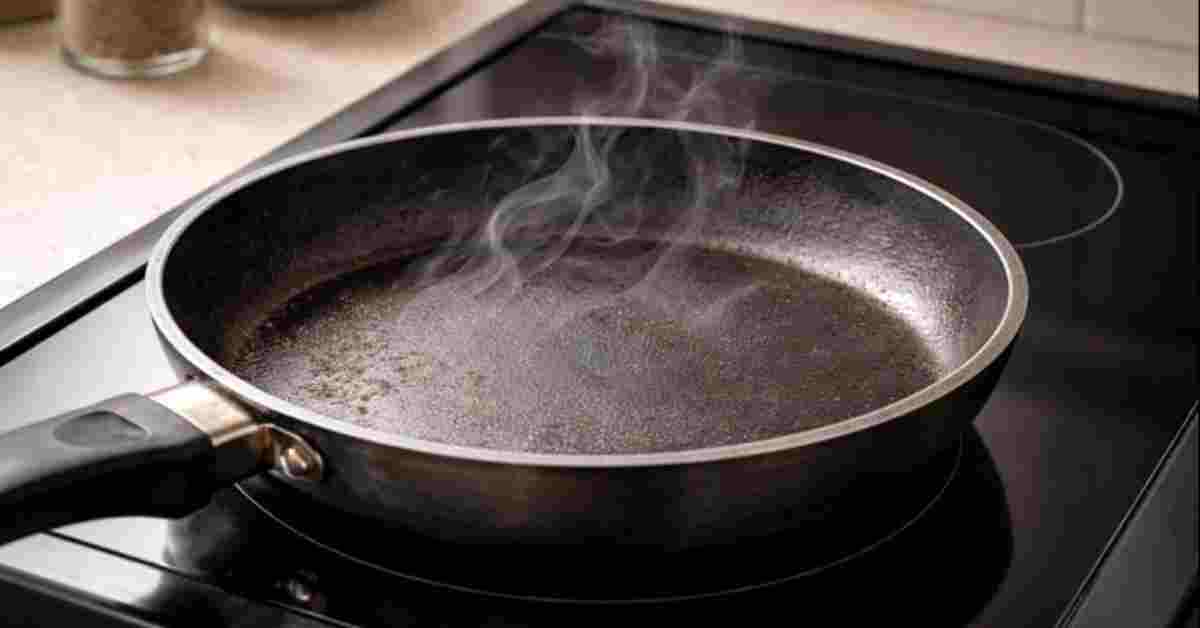
Some pans smoke at low heat because leftover oil residue, seasoning buildup, or manufacturing coatings are burning off well below normal cooking temperatures. Low-quality nonstick coatings or overheated empty pans can also degrade quickly, causing smoke even on gentle heat.
It’s a common kitchen mystery: your pan starts smoking even when the heat isn’t very high. This can be confusing, especially for new cooks. You might wonder, “Why Some Pans Smoke at Low Heat?” Don’t worry, it’s usually something simple to fix.
We’ll break it down step-by-step to make cooking easier and less smoky. Let’s figure out what’s causing that smoke and how to stop it for good. We’ll look at common culprits and how to prevent them.
Key Takeaways
- Different pan materials react to heat in various ways.
- Residue from cooking or cleaning can cause smoking.
- The type of oil used and its smoke point matter a lot.
- Preheating your pan too long or too hot is a frequent issue.
- Simple cleaning and proper oil choices prevent most smoking problems.
Understanding Pan Materials and Heat
Cast Iron Pans
Cast iron pans are known for their durability and ability to retain heat. This means they get hot and stay hot. When you’re cooking with cast iron, it’s important to remember that it takes a bit longer to heat up, but it also cools down slowly.
This heat retention is great for searing meats, giving them a nice crust. However, it also means that if you overheat cast iron, it can stay hotter than you expect, leading to smoking even after you’ve lowered the burner. This is especially true if there are any food particles or oil residue left from previous uses.
Seasoning is a key aspect of cast iron care. Seasoning is a protective layer of polymerized oil that coats the pan. This layer helps make the pan non-stick and prevents rust.
If the seasoning is weak or uneven, hot spots can develop more easily, leading to smoking. Over time, repeated heating and cooling can also affect the seasoning. It’s important to maintain it properly with oiling and occasional re-seasoning.
- Cast iron heats evenly once it reaches temperature.
- It holds heat very well, which can be a double-edged sword.
- Proper seasoning is vital for preventing sticking and smoking.
When seasoning cast iron, you apply a thin layer of cooking oil and then heat the pan to a high temperature. This process changes the oil at a molecular level, creating a hard, slick surface. A well-seasoned pan should look dark and somewhat glossy.
If your cast iron looks dull or has bare patches, it might be time to re-season. This process itself can sometimes produce smoke, but that’s normal and part of creating the non-stick surface. Once seasoned, regular cooking with oil will help maintain and even improve the seasoning.
Non-Stick Pans
Non-stick pans, often coated with materials like Teflon, are popular for their easy food release. However, these coatings have limits. They are generally not meant for very high heat.
When non-stick pans get too hot, the coating can degrade, release fumes, and start to smoke. This is often why you see smoke, even at lower settings, if the pan is older or has been overheated.
The materials used in non-stick coatings are designed to break down at specific temperatures. Exceeding these temperatures can damage the pan permanently. This damage can not only cause smoking but also make the pan less effective at releasing food.
Always check the manufacturer’s instructions for the maximum recommended heat for your specific non-stick pan. Usually, medium heat is sufficient for most cooking tasks with these types of pans.
- Non-stick coatings can degrade at high temperatures.
- Always check the maximum heat rating for your pan.
- Using metal utensils can scratch the coating and lead to issues.
Some non-stick pans use ceramic or other newer technologies. These may have different heat tolerances. However, the general advice remains: avoid extreme heat.
Even with newer types, prolonged overheating can still lead to issues. The ease of cleaning is a major plus, but this can sometimes lead to a false sense of security, making people think they can use any heat level.
Stainless Steel Pans
Stainless steel pans are workhorses in the kitchen. They are durable and react well to heat. However, they can also be prone to sticking and smoking if not used correctly.
Stainless steel doesn’t have a natural non-stick surface, so it relies on proper heating and the use of cooking fat to prevent food from sticking and causing smoke.
The main reason stainless steel pans smoke at lower heat is often due to food residue or oil left on the pan from previous use. These particles burn off when heated, creating smoke. Another common cause is heating the pan too quickly or for too long before adding food.
This can create hot spots that cause oil to break down and smoke. A little patience with preheating goes a long way with stainless steel.
- Stainless steel requires careful temperature control.
- Food particles left on the pan will burn and smoke.
- Preheating is important, but overdoing it can cause smoke.
One trick with stainless steel is the water drop test. If you preheat the pan and a drop of water sizzles away immediately, it’s not hot enough. If it evaporates instantly and disappears, it’s too hot.
The ideal temperature is when the water forms a bead and skims across the surface before breaking apart. This indicates the pan is hot enough to cook without excessive smoking or sticking. Using enough oil also helps create a temporary non-stick layer.
The Role of Cooking Oils
Smoke Points of Oils
Cooking oils have different “smoke points.” This is the temperature at which the oil starts to break down and smoke. When an oil smokes, it means it’s degrading and can affect the taste of your food, and it’s a sign the pan is getting too hot for that particular oil.
For example, extra virgin olive oil has a lower smoke point than vegetable oil or canola oil. If you’re trying to sear something at a higher heat and use extra virgin olive oil, it will likely start smoking. Using an oil with a high smoke point is essential for higher-heat cooking methods.
- Different oils have different smoke points.
- Using an oil below its smoke point prevents smoking.
- High smoke point oils are better for high-heat cooking.
Here’s a quick look at some common cooking oils and their approximate smoke points:
| Oil Type | Approximate Smoke Point (°C) | Approximate Smoke Point (°F) |
|---|---|---|
| Extra Virgin Olive Oil | 190-207°C | 375-405°F |
| Vegetable Oil | 204-232°C | 400-450°F |
| Canola Oil | 204-242°C | 400-470°F |
| Avocado Oil | 271°C | 520°F |
| Grapeseed Oil | 216°C | 420°F |
When you see smoke coming from your pan, it’s often a sign that the oil you’re using has passed its smoke point. If you’re cooking at a lower heat and the pan still smokes, it could be that you’re using an oil with a very low smoke point, or there’s residual oil in the pan from previous cooking that’s burning off.
Choosing the Right Oil for Low Heat
Even at low heat, the type of oil you use can make a difference. If you’re cooking delicate foods or want a gentle heat, you might still be using an oil with a moderate smoke point. For very low-heat cooking, like making a delicate sauce or gently sautéing vegetables, even a standard vegetable oil is usually fine as it has a higher smoke point than some others.
However, if you’re seeing smoke at what you consider low heat, consider if the oil itself is the issue. Perhaps you’re using a flavored oil with additives that might break down quicker. It might be worth switching to a more neutral oil with a known higher smoke point, like canola or vegetable oil, to see if that resolves the problem.
- Neutral oils are often best for everyday cooking.
- Flavored oils can sometimes smoke at lower temperatures.
- Always check the oil’s smoke point if you’re unsure.
Sometimes, the problem isn’t the oil itself but how it’s applied. Using too much oil can also lead to smoking, as the excess oil heats up and burns off. A thin, even layer is usually all you need.
If you’re using an oil with a very high smoke point, like avocado oil, it’s very unlikely to smoke at typical low-heat settings unless the pan is already extremely hot.
Residue and Cleaning Issues
Leftover Food Particles
One of the most common culprits for a pan smoking at low heat is leftover food debris. Even after washing, tiny bits of food can stick to the pan’s surface. When the pan is heated, these small particles burn.
This burning creates smoke and can give your food an unpleasant, acrid taste.
This is especially true for pans that aren’t cleaned thoroughly after every use. If you’ve cooked something with bits that are hard to scrub off, like burnt-on cheese or small seeds, they can remain. Over time, these small bits build up and become a persistent source of smoke.
- Tiny food particles burn easily when heated.
- Thorough cleaning prevents residue buildup.
- This is a frequent cause of unexpected smoking.
Think of it like leaving crumbs on a plate and then heating the plate. The crumbs will char. The same thing happens on your pan.
Regular, diligent cleaning with appropriate tools will help prevent this. For tough bits, soaking the pan can help loosen them before you try to scrub.
Improper Cleaning Methods
The way you clean your pans can also contribute to them smoking. For non-stick pans, using abrasive scrubbers or harsh detergents can damage the coating. This damage can then lead to smoking even at lower temperatures, as the protective layer is compromised.
For cast iron, aggressive cleaning methods that strip away the seasoning are a major no-no. While you need to remove food, you don’t want to remove the seasoned layer. This is why many recommend using a stiff brush or a scraper, and avoiding dishwashers for cast iron.
Stainless steel is more forgiving, but using steel wool on a polished surface can scratch it. These scratches can then trap food particles more easily, leading to future smoking issues. Always check the manufacturer’s recommendations for cleaning your specific cookware.
- Harsh cleaning can damage pan surfaces.
- Damage leads to increased sticking and smoking.
- Follow manufacturer’s cleaning advice.
Sometimes, even if a pan looks clean, it might have a thin film of grease or oil. If this oil is old or has been exposed to air, it can go rancid. Heating rancid oil will definitely produce smoke and a bad smell.
A good scrub with soap and water is usually enough to remove this, but for particularly stubborn grease, a degreaser designed for cookware might be necessary.
Preheating Mistakes
Overheating the Pan
This is a very common reason for pans smoking at what seems like low heat. People often put a pan on the stove and turn the heat up high, leaving it there for an extended period to “get hot.” While some pans, like cast iron, benefit from a good preheat, they can also be overheated. Overheating means the pan’s temperature goes beyond what the cooking oil can handle, or even beyond what the pan itself can safely withstand.
When a pan gets too hot, any oil in it will quickly reach its smoke point and start to break down, producing smoke. Even if you add food after the pan is smoking, the existing heat can continue to degrade the oil and the food surface, leading to burnt flavors and more smoke. It’s a cycle that’s hard to break once it starts.
- Leaving a pan on high heat for too long causes overheating.
- Overheated pans make oil reach its smoke point faster.
- This is a very common beginner mistake.
For non-stick pans, overheating is particularly damaging. The coatings are not designed for extreme temperatures, and prolonged exposure can cause them to warp, blister, or release fumes. This is why many non-stick pans come with warnings against using them on high heat or leaving them unattended on a hot stove.
Preheating Too Long
Even if you’re using a moderate heat setting, preheating a pan for too long can still lead to smoking. A pan doesn’t need to be scorching hot to cook most foods. For many dishes, a gently heated pan is ideal.
Allowing it to sit on the heat for an extra 5-10 minutes after it’s already warm enough can push it past the point where oil or food residues start to burn.
The goal of preheating is to bring the pan to the right cooking temperature. This usually takes only a few minutes, depending on the stove and the pan material. Once the pan is evenly heated, it’s time to add your oil and then your food.
Leaving it on the heat longer than necessary is like leaving a kettle on the stove after the water has boiled – it’s just wasting energy and potentially causing damage or smoke.
- Preheating for too long can still cause problems.
- Most pans only need a few minutes to reach cooking temperature.
- Avoid leaving a pan unattended on heat for extended periods.
Consider the type of cooking you’re doing. For gentle sautéing, a moderately warm pan is perfect. For searing, you’ll need a hotter pan, but even then, the time it takes to get there is usually shorter than people think.
A good rule of thumb is to preheat for about 2-3 minutes on medium heat for most stovetop cooking, and then assess if it’s hot enough for your needs.
Putting it All Together: Simple Solutions
Smart Oil Selection
Choosing the right cooking oil is one of the easiest ways to prevent your pan from smoking at lower heat. If you’re not sure about your pan’s heat level or if you’re new to cooking, opt for oils with higher smoke points. Canola oil, vegetable oil, grapeseed oil, and avocado oil are good choices that are widely available.
Avoid using extra virgin olive oil for high-heat searing or frying. It’s better suited for dressings or finishing dishes. If you want to cook with olive oil at higher temperatures, refined olive oil or light olive oil has a higher smoke point than extra virgin.
Always check the oil’s packaging for information on its smoke point if you’re concerned.
- Use oils with higher smoke points for most cooking.
- Refined oils generally have higher smoke points than unrefined ones.
- Match your oil to your cooking temperature.
If your recipe calls for a specific oil with a lower smoke point, you might need to adjust your cooking method. For instance, you could add the oil later in the cooking process, or use a combination of oils where a high-smoke-point oil is used for heating and a lower-smoke-point oil is added for flavor at the end. This offers the best of both worlds.
Thorough Cleaning Habits
Making cleaning a priority after every meal is key. Don’t let food residue sit in your pans for too long. Rinse your pans immediately after cooking, and then wash them thoroughly with soap and water.
For stubborn bits, use a non-abrasive scrubber or a pan scraper. For cast iron, remember to dry it completely immediately after washing to prevent rust, and apply a thin layer of oil before storing.
For non-stick pans, always use soft sponges or cloths. Avoid steel wool or harsh scouring pads, as these can scratch and damage the non-stick surface. If food is really stuck, try soaking the pan in warm, soapy water for a while before scrubbing.
A clean pan is a happy pan, and a happy pan is less likely to smoke unexpectedly.
- Clean your pans right after use.
- Use appropriate cleaning tools for each pan type.
- Dry pans completely, especially cast iron.
Regularly inspect your pans for any signs of damage or excessive wear. If a non-stick pan has scratches or is peeling, it might be time to replace it. For cast iron, if the seasoning looks patchy or dull, consider re-seasoning it.
Taking good care of your cookware will not only prevent smoking but also extend the life of your pans.
Mindful Preheating
Be patient when preheating your pans. Start with medium heat for most cooking tasks. Allow the pan to heat up gradually.
You can test if it’s ready by adding a drop of water. If it sizzles and evaporates immediately, it’s likely too hot. If it beads up and skims across the surface, it’s usually just right.
For non-stick pans, medium-low heat is often sufficient.
For stainless steel, a brief preheat on medium heat is usually enough. You can add your oil once the pan is warm. The oil will then heat up with the pan, and this often prevents sticking and smoking better than adding oil to a scorching hot pan.
If you’re unsure, err on the side of caution and use slightly lower heat and a bit more time. It’s better to take a few extra minutes than to end up with burnt food and smoke.
- Start with medium heat for preheating.
- Don’t leave pans on high heat for extended periods.
- Test pan temperature with a water drop.
A common mistake is turning the heat up high and then forgetting about the pan. Always stay near the stove while preheating. This allows you to turn down the heat or remove the pan if it starts to smoke.
Being present and aware of your cooking process is the best way to prevent many common kitchen issues, including smoking pans.
Frequently Asked Questions of Why Some Pans Smoke At Low Heat
Why does my brand new pan smoke?
New pans can sometimes have a protective coating applied by the manufacturer to prevent damage during shipping. This coating needs to be washed off with soap and water before the first use. Sometimes, even after washing, a new pan might smoke a little the very first time it heats up as any manufacturing residue burns off.
Can I use cooking spray on my non-stick pan?
It’s generally advised not to use cooking spray on most non-stick pans. The propellants and emulsifiers in cooking sprays can build up on the surface over time, creating a sticky residue that is difficult to remove. This residue can then burn and cause smoking, and it can also damage the non-stick coating.
My cast iron pan smokes when I make bacon. What should I do?
Bacon itself releases a lot of fat, which can cause smoking. Try cooking the bacon at a slightly lower heat than you might expect. If the pan is already seasoned well, the bacon fat should help create a non-stick surface.
Is it safe to cook with a pan that is smoking?
While occasional, light smoke from oil hitting its smoke point isn’t usually a major health hazard, it’s not ideal for food flavor and can indicate that your pan is too hot or the oil is degrading. If the smoke is heavy or black, it’s best to turn off the heat, let the pan cool, and address the issue before continuing. This type of smoke can release unpleasant fumes.
How do I know if my pan is seasoned enough?
A well-seasoned cast iron pan will have a dark, slightly glossy appearance. Food should release fairly easily from it. If food sticks constantly, and the pan looks dull or has bare spots, the seasoning might be weak or gone.
Final Thoughts
It’s easy to get discouraged when your pan starts smoking, especially when you think the heat is low. But now you know that the cause is usually a combination of things like the pan material, the type of oil you’re using, and how clean your pan is. For instance, if you’re using a non-stick pan, overheating it can damage the coating and lead to smoke.
Or, if you have tiny bits of old food stuck on your cast iron, they will burn and smoke even on a medium-low setting.
The good news is that these issues are often preventable with simple habits. Always pick an oil that can handle the heat you’re cooking at; higher smoke point oils like canola or vegetable oil are great for general cooking. Make sure to give your pans a good scrub after each use to get rid of any leftover bits that could burn later.
And be patient with preheating – let your pan warm up gradually on a moderate heat rather than blasting it on high.
By paying attention to these details – choosing the right oil, cleaning your pans well, and preheating them mindfully – you can greatly reduce or even eliminate the problem of pans smoking at low heat. This means less frustration and more delicious, perfectly cooked meals. So, keep these tips in mind next time you’re in the kitchen, and enjoy cooking with confidence!