
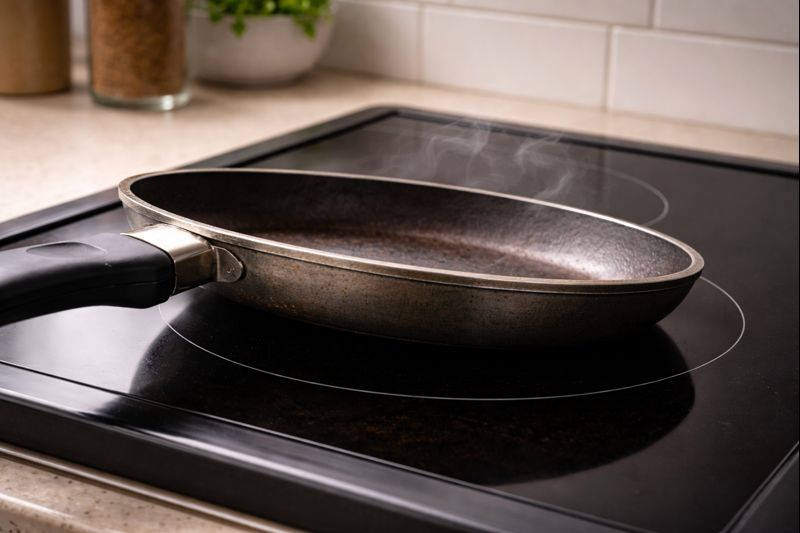
Pans rattle or rock on stoves because their bases are warped, uneven, or not fully flat, often caused by overheating or rapid temperature changes. This instability is more noticeable on glass and induction cooktops, where full contact with the surface is required for proper balance and heat transfer.
It’s a common kitchen puzzle: why do some pans seem to have a mind of their own, dancing and rattling on the stovetop? For folks just starting out in the kitchen, figuring out What Makes Pans Rattle or Rock on Stoves can be a little confusing. You just want to cook a nice meal, and suddenly your pan is making a racket!
Don’t worry, it’s not you, and we’ll break down exactly why this happens. We’ll walk through the simple reasons behind this kitchen annoyance and show you how to get your pans sitting nice and steady. Get ready for some straightforward tips that will make cooking a lot more peaceful!
Key Takeaways
- Different stovetop surfaces affect how pans sit and interact.
- The flatness of a pan’s bottom is a major factor in its stability.
- Heat can cause pans to warp, leading to wobbling.
- Stove burner design and pan material play roles in rattling.
- Simple checks can help you identify and fix pan instability.
- Choosing the right cookware can prevent many of these issues.
Understanding Stovetop Surfaces and Pan Stability
The surface of your stove is the first big player when it comes to pan stability. Think about the different types of stoves out there: some have classic coil burners, others have smooth glass or ceramic surfaces, and then there are professional gas grates. Each of these has its own way of interacting with the bottom of your pan, and this interaction is key to preventing that annoying rattle or rock.
A perfectly flat pan on a perfectly flat surface is usually a recipe for stillness. However, introduce any bumps, curves, or inconsistencies, and you’ve got the potential for movement.
Coil Burner Stoves
Coil burners, those familiar red-hot coils, are a common sight in many kitchens. They heat up the pan from below, but the coils themselves aren’t perfectly flat. They often have a slight curve or are raised in the center.
This design means that even a flat-bottomed pan might not make full, even contact with the coil. Small gaps can form, allowing the pan to shift slightly as you cook or stir. This is a prime culprit for that gentle rocking motion.
The way the pan sits on the raised edge of the coil can also cause it to tilt.
- Coil burners are not perfectly flat, leading to uneven contact with pan bottoms.
- The raised edges of coil burners can cause pans to sit unevenly and wobble.
- Even minor imperfections in the pan’s base can amplify instability on coil stoves.
When you place a pan on a coil burner, imagine the coil as a gentle hill. If the bottom of your pan is like a perfectly flat board, it will only touch the very top of that hill. The sides of the board will be slightly elevated, giving it room to rock back and forth.
This is why even a heavy cast iron skillet might seem a bit wobbly on this type of stove. It’s all about the lack of uniform support across the entire base of the cookware.
Smooth Glass or Ceramic Cooktops
Glass and ceramic cooktops offer a sleek, modern look and are generally very flat. This flatness is fantastic for providing even heat distribution to your pans. However, the smoothness itself can sometimes be a double-edged sword.
If a pan has a slightly uneven base, or if there are any tiny particles of food or debris between the pan and the glass, the pan can slide or rock more easily. The smooth surface offers less natural friction to hold the pan in place. Think of trying to slide a smooth rock across a smooth table; it moves with relative ease.
The same principle applies here.
- Glass cooktops are very flat, which can make it easier for pans to slide if the pan base isn’t perfectly flat.
- Debris or food particles on the surface can cause pans to move unpredictably.
- The smooth surface offers less resistance, allowing for more noticeable rocking with minor imperfections.
These cooktops are designed to be level, which sounds great for stability. But, the lack of any guiding ridges or dips means that any slight imperfection in the pan’s bottom will be immediately noticeable. If the pan has a tiny high spot, it will rock on that spot.
If it has a slight concave or convex curve, the edges might lift, causing it to wobble. It’s a bit like balancing a slightly uneven object on a perfectly flat surface; it’s going to find its tipping point.
Gas Stovetops and Grates
Gas stoves use grates to support the cookware. These grates are usually made of cast iron and are designed to be sturdy. The surface of the grates themselves can vary.
Some have very flat, close-set bars, while others might have wider spacing or a more contoured design. The spacing and height of these grates can significantly impact how stably a pan sits. If the bottom of your pan is narrow or has an unusual shape, it might only rest on a few points of the grate, leading to instability.
The material, cast iron, is also inherently uneven on a microscopic level.
- The design and spacing of gas stove grates can create instability for certain pan shapes.
- Cast iron grates, while sturdy, have microscopic textures that can affect pan contact.
- Pans with smaller bases may only rest on a few points of the grate, increasing the chance of rocking.
Imagine placing a small, round pot onto a set of parallel bars. If the pot is just the right size, it might sit snugly between the bars. But if it’s slightly smaller or larger, or if the bars aren’t perfectly aligned, it could easily tip or rock.
Gas grates work in a similar fashion. The interaction between the pan’s base and the specific configuration of the grate bars is what determines its stability. A pan that feels steady on one grate might wobble on another with a different bar design.
The Crucial Role of Pan Bottom Flatness
Beyond the stovetop, the actual bottom of your pan is a huge factor in why it might rattle or rock. Even when a pan looks perfectly flat to your eye, tiny imperfections can exist. These imperfections are amplified by the way the pan interacts with the heat and the stovetop.
A pan that’s perfectly flat when cold might change shape slightly when heated, leading to wobbling. This is especially true for pans made from certain materials or those that are not constructed with flatness as a primary design feature.
What “Flat” Really Means for Cookware
When we talk about a “flat” pan bottom, we mean a surface that is uniformly level and makes full contact with the heat source or stovetop. Ideally, the entire base of the pan should touch the stove simultaneously. However, manufacturing processes, material properties, and even wear and tear can introduce subtle warps or curves.
A pan that isn’t perfectly flat will have high spots and low spots. When placed on a stove, it will rock or wobble on these high spots, much like a table with a short leg.
- A truly flat pan bottom ensures even contact with the stovetop for maximum stability.
- Manufacturing variations and the natural properties of metals can lead to imperfectly flat pan bases.
- Even slight deviations from perfect flatness can cause noticeable rocking on certain stovetops.
Consider a brand-new piece of cookware. Even the best ones can have minute deviations. Sometimes, the stamping process that forms the pan’s shape can leave slight inconsistencies.
This is why looking at a pan from the side, even when it’s cold, can sometimes reveal if the bottom is perfectly level or if it has a slight dome or dip. This subtle curvature is often the root cause of that unsettling wobble we experience during cooking.
Warping Due to Heat and Material
One of the most common reasons a pan starts to rock is heat-induced warping. Most pans are made of metal, and metals expand when heated. The rate of expansion and contraction varies depending on the type of metal.
Pans made from thinner materials or those with a single layer of metal are more susceptible to warping. When the bottom of the pan heats up unevenly, or heats up too quickly, one part can expand more than another, causing the pan to bend slightly.
- Heat causes metal to expand, and uneven heating can lead to pan bottoms bending or warping.
- Thinner materials and single-ply constructions are more prone to heat-induced warping.
- A warped pan will not sit evenly on the stovetop, causing it to rock.
Imagine a strip of metal. If you heat one end of it more than the other, the hot end will try to get longer. If the metal is flexible enough, the whole strip will bend.
This is precisely what happens to a pan on a hot stove. If the heat is too high, or if certain parts of the pan are heated much faster than others, the metal can deform. This deformation is often irreversible and leads to a permanent wobble, even after the pan cools down.
Multi-Ply vs. Single-Ply Construction
The way a pan is constructed plays a big role in its resistance to warping. Multi-ply pans, often called clad cookware, have layers of different metals bonded together. A common construction is a core of aluminum or copper sandwiched between stainless steel.
The aluminum or copper is a good conductor of heat, spreading it evenly. The stainless steel provides durability and a stable exterior. This layering helps to distribute heat more uniformly across the pan’s bottom, significantly reducing the chances of uneven expansion and warping.
- Multi-ply (clad) cookware uses layers of metal to distribute heat evenly, preventing warping.
- A core of conductive metal like aluminum or copper, sandwiched between stainless steel, is a common and effective design.
- Single-ply pans, often made from a single sheet of metal, are more susceptible to bending and warping under heat.
Think of it like building a wall. A single brick might be strong, but it’s also prone to cracking if you hit it hard. Now imagine building that wall with multiple types of bricks, carefully layered.
This layered approach provides much greater structural integrity and resistance to stress. In cookware, these layers work together to create a pan that is less likely to bend, warp, and therefore, rock on your stove.
Checking for Flatness at Home
You don’t need fancy tools to check if your pan is flat. A simple straight edge or even another flat object can help. Place a ruler or a sturdy, flat metal spatula across the bottom of your clean, dry pan.
See if it sits evenly and makes contact all the way across. You can also try placing the pan on a perfectly flat surface, like a granite countertop, and gently try to rock it. Any noticeable wobble indicates that the pan’s bottom isn’t perfectly level.
This easy test can help you identify which pans are causing your stovetop dance party.
- Use a ruler or straight edge across the pan’s bottom to check for gaps.
- Placing the pan on a known flat surface and trying to rock it can reveal instability.
- Identifying warped pans helps you understand why they might be rattling on your stove.
This simple diagnostic step can save you a lot of frustration. If you find a pan consistently wobbles, it’s likely the culprit. Knowing this allows you to either try to use it on a different type of burner where it might sit better, or to consider replacing it with a more stable option, especially if it’s a frequently used pan.
It’s about being aware of your tools and how they perform.
How Heat Affects Pan Stability
Heat is the engine of cooking, but it can also be the enemy of a stable pan. The way heat is applied, its intensity, and how the pan material reacts to it all contribute to whether your cookware stays put or starts a jig. Understanding this relationship is key to preventing that unsettling rattle that can happen mid-stir.
Uneven Heat Distribution
Even with a flat pan and a level stove, uneven heat distribution can cause problems. If one part of the pan gets much hotter than another, that hotter part will expand more. This differential expansion is what leads to warping, even in pans that were initially flat.
This can happen if the burner size doesn’t match the pan size, or if the burner itself has hot spots. For example, a large pan on a small burner will only heat effectively in the center, leaving the outer edges cooler and less expanded.
- Uneven heating causes localized expansion, leading to bending and rocking.
- Burner size relative to pan size is a key factor in heat distribution.
- Cookware designed for even heat conduction helps mitigate this issue.
Imagine placing your hand on a surface that’s hot in one spot and cold everywhere else. Your hand would feel the tension as the hot part tries to expand while the cold part doesn’t. A pan bottom experiences this on a larger scale.
This stress within the metal can cause it to deform, creating that wobble. It’s the invisible forces at play during cooking.
Thermal Shock
Thermal shock is another factor. This happens when a pan experiences a rapid temperature change. For instance, taking a very hot pan and plunging it into cold water, or placing a cold pan on a scorching hot burner can cause rapid expansion or contraction.
This sudden stress can weaken the metal and contribute to warping over time. Even just splashing cold water onto a very hot pan while cooking can create localized stress points.
- Rapid temperature changes can stress the metal in a pan, leading to warping.
- Avoid sudden transitions from extreme heat to cold, or vice versa.
- Allow pans to cool slightly before cleaning or rinsing them.
Think about how glass can shatter if you pour boiling water into a cold glass. While metal cookware is more forgiving, the principle of rapid expansion and contraction causing stress is similar. Over time, these stresses build up, making the pan more likely to warp and become unstable on the stovetop.
Gentle treatment of your cookware helps preserve its shape and stability.
Material Properties and Heat Response
Different materials react to heat differently. Stainless steel, while durable, can warp if it’s a single layer and heated intensely. Aluminum is an excellent heat conductor, making it great for even cooking, but it can also warp more easily than steel if not constructed with reinforcing layers.
Cast iron is very stable and retains heat well, but it can also be prone to minor warping over time if subjected to extreme, uneven heat. Copper is fantastic for heat conductivity and evenness but is also quite soft and can deform.
- Each cookware material has a unique response to heat that influences its stability.
- Aluminum conducts heat well but can be prone to warping.
- Cast iron is stable but can develop minor warps with extreme temperature changes.
The choice of material, and how it’s engineered into the pan, directly impacts its susceptibility to becoming unstable when heated. A well-designed multi-ply pan aims to leverage the best properties of different metals to create a stable, responsive, and warp-resistant cooking surface. This engineering is what separates a stable cooking companion from a wobbly nuisance.
Burner Design and Pan Material Synergy
The interaction between the stovetop burner design and the material of your pan is more than just them touching; it’s a partnership that can lead to either rock-solid stability or an unpredictable dance. Understanding this synergy helps explain why some pans work beautifully on one stove but wobble on another.
Matching Burner Size to Pan Base
One of the simplest ways to ensure stability is to match the size of your burner to the size of your pan’s base. A pan that extends far beyond the burner will have cooler edges, leading to uneven heating and potential warping. Conversely, a pan that is much smaller than the burner might only make contact with the very center of the heat source, again creating uneven temperatures.
For coil burners, a pan that sits fully on the coil provides the best support. On glass tops, ensuring the pan covers most of the radiant element is beneficial for even heating and stability.
- Using a burner that matches the pan size promotes even heating and stable contact.
- Pans extending beyond the burner can lead to uneven cooking and warping.
- A pan that fully covers the heat source offers better support and temperature control.
Think of it like trying to balance a plate on a small stool versus a large table. On the small stool, the plate might easily tip. On the large table, it has much more surface area to rest upon.
Similarly, when your pan’s base fully engages with the burner, it receives consistent support and heat, minimizing the chances of it rocking or tipping.
Surface Texture of Cookware Materials
Beyond the absolute flatness, the microscopic texture of a pan’s base can also play a role. Cast iron, for instance, often has a slightly rougher texture than polished stainless steel. This texture can provide a bit more grip on some stovetops, paradoxically making it more stable even if it has minor imperfections.
Non-stick coatings, on the other hand, are typically very smooth. If the pan itself has a slight warp, that smoothness can allow it to slide more easily on a glass top.
- The surface texture can influence how a pan grips the stovetop.
- Rougher textures might offer more friction and stability.
- Smoother surfaces can sometimes lead to more noticeable sliding or rocking with minor warps.
Imagine trying to slide a piece of sandpaper across a table versus a smooth piece of plastic. The sandpaper will catch and resist movement more. In a similar way, the texture of your pan’s bottom can create more or less friction with the stovetop surface, affecting its tendency to slide or rock.
Considerations for Different Stovetop Types
Some stovetops are more forgiving than others. Gas grates, with their individual supports, can sometimes accommodate slightly less-than-perfectly flat pans better than a perfectly flat glass top. However, if the grate bars are too far apart or uneven, they can create instability.
Electric coil stoves can also be forgiving, but the unevenness of the coil itself can be a source of wobble. The ideal scenario for most pans is a perfectly flat bottom meeting a perfectly flat, smooth surface like an induction or some glass-top stoves, provided the pan is truly flat.
- Different stovetop types offer varying degrees of tolerance for pan imperfections.
- Gas grates can sometimes offer more points of contact, stabilizing slightly warped pans.
- Glass and induction tops require the most flatness in cookware for optimal stability.
The combination of your specific stove and your specific pan creates a unique interaction. What works perfectly in one kitchen might be a source of constant annoyance in another. It’s about finding the right match between your cookware and your cooking appliance.
Tips for Achieving Pan Stability
Now that we know why pans rattle and rock, let’s talk about how to stop it from happening and ensure your cookware sits firmly on the stove.
Choosing the Right Cookware
When buying new pans, pay attention to the construction and the flatness of the bottom. Look for multi-ply or clad cookware, as these are generally more warp-resistant. Check the pan’s base for flatness by placing it on a level surface or using a straight edge.
Some brands are known for their superior flatness. For glass or ceramic cooktops, a truly flat, heavy-bottomed pan is best. For gas stoves, pans with a base that can make good contact with the grates are ideal.
- Opt for multi-ply or clad cookware for better warp resistance.
- Always check the flatness of the pan’s bottom before purchasing.
- Consider your stovetop type when selecting cookware for optimal stability.
Investing in quality cookware that is designed to remain flat under heat will save you a lot of kitchen frustration. It’s a proactive step towards a more stable and enjoyable cooking experience.
Proper Pan Placement and Use
Always place your pan directly in the center of the burner. Ensure the burner size is appropriate for the pan. For gas stoves, try to position the pan so its base makes as much contact with the grate as possible, avoiding resting it only on the edges.
Avoid sudden temperature changes to prevent thermal shock. When cleaning, allow pans to cool down before immersing them in water.
- Center your pan on the burner to ensure even heating and support.
- Match the pan’s base to the burner size for consistent heat.
- Handle pans gently to avoid dropping or banging them, which can cause damage.
These simple habits in how you use your cookware contribute greatly to its longevity and its stability on the stove. Little acts of care make a big difference.
Simple Fixes for Minor Issues
If a pan has a very minor warp, sometimes using it on a different type of stove or burner can help. For example, a pan that rocks on a flat glass top might sit more stably on the uneven surface of a coil burner. For gas stoves, you might be able to slightly adjust the position of the pan on the grate to find a more stable spot.
However, for significant warping, replacement is often the best solution.
- Experiment with different burner types if you have multiple stove options.
- Slight adjustments on gas grates might find a more stable position.
- For severe warping, consider replacing the cookware for safety and stability.
Sometimes, a little trial and error with how you position the pan can make a noticeable difference. It’s about finding the sweet spot that keeps your pan still while you cook.
Frequently Asked Questions of What Makes Pans Rattle Or Rock On Stoves
Why does my brand new pot rock on my new stove?
Even new cookware and stoves can have slight imperfections. Your new pot might have a very subtle curvature in its base that happens to align with a slight contour on your new stove’s burner or grates, causing it to rock. It’s often a combination of minor variations.
Can a dirty stove cause my pan to rock?
Yes, debris or food particles on the stovetop surface, especially on smooth glass tops, can create uneven contact points between the pan and the stove. This can cause a stable pan to rock or slide.
Does the weight of a pan affect its rocking?
While weight itself doesn’t cause rocking, heavier pans are often made with thicker materials and more stable constructions, making them less prone to warping and thus less likely to rock. A heavy but warped pan will still rock.
Final Thoughts
It’s a common kitchen puzzle: why do some pans seem to have a mind of their own, dancing and rattling on the stovetop? For folks just starting out in the kitchen, figuring out What Makes Pans Rattle or Rock on Stoves can be a little confusing. You just want to cook a nice meal, and suddenly your pan is making a racket!
Don’t worry, it’s not you, and we’ve broken down exactly why this happens. The type of stovetop surface, whether it’s coils, glass, or gas grates, plays a big part. The flatness of your pan’s bottom is also super important; even tiny warps can cause problems.
Heat is another factor, as it can cause pans to expand and sometimes bend. The way your pan’s material and your stove’s burner design work together also matters a lot. We’ve explored how different constructions like multi-ply vs.
single-ply can affect stability and how matching your burner size to your pan is a simple step toward better cooking. Real-life examples show that it’s often a combination of factors, like a slightly curved pan meeting a slightly uneven coil. To keep your pans steady, choose well-made, flat-bottomed cookware, center your pans on the burners, and avoid sudden temperature changes.
Paying attention to these details will make your cooking smoother and safer.