
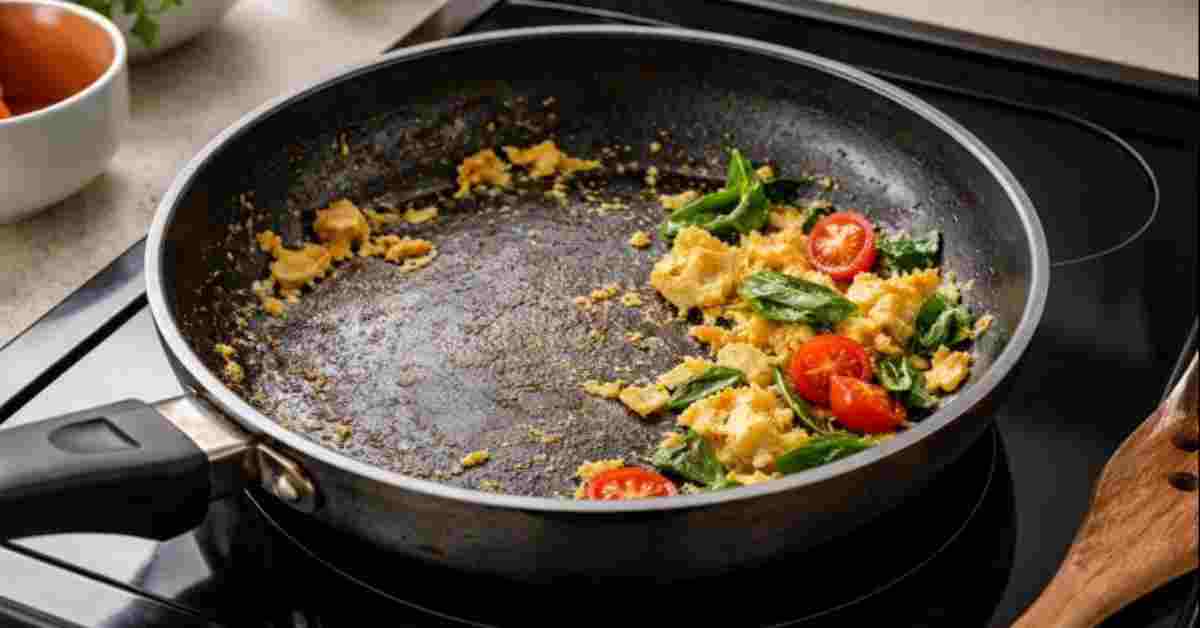
Food suddenly starts sticking to nonstick pans because the coating has worn down, been scratched, or become damaged by high heat and abrasive cleaning. Over time, oil residue and overheating reduce the pan’s nonstick properties, causing food to cling to the surface instead of releasing easily.
Ever found yourself frustrated when your nonstick pan suddenly decides to grip your eggs like superglue? It’s a common puzzle for many home cooks, especially when you thought your trusty pan was invincible. The good news is, there’s usually a simple reason behind this sticky situation, and figuring it out is easier than you think.
We’re going to break down exactly why this happens and, more importantly, how to fix it so your pans stay wonderfully nonstick. Get ready to learn some easy tips that will bring your cooking back to smooth sailing!
Key Takeaways
- Nonstick pans lose their magic due to a build-up of burnt-on food particles.
- Using too much oil or cooking spray is a frequent culprit for sticky pans.
- Extreme temperature changes can damage the nonstick coating.
- Dishwashers are harsh on nonstick surfaces, leading to quicker wear and tear.
- Proper cleaning and maintenance are essential for preserving nonstick quality.
- Seasoning your nonstick pan correctly can restore its performance.
The Science Behind Nonstick Surfaces
Nonstick pans seem like magic, but they work because of some clever science. Most nonstick coatings, like Teflon (which is a brand name for polytetrafluoroethylene, or PTFE), are made of materials that food doesn’t easily stick to. This low-adhesion property is due to the molecular structure of the coating, which has very weak bonds with most food substances.
When food is cooked, it interacts with the pan’s surface, and in a well-maintained nonstick pan, these interactions are minimal. The coating itself is engineered to create a barrier that prevents food molecules from forming strong attachments.
How Nonstick Coatings Work
The surface of a nonstick pan is incredibly smooth at a microscopic level. This smoothness means there are fewer places for food to grab onto. Think of it like trying to stick something to a perfectly polished mirror versus a rough piece of sandpaper; the mirror offers very little for the object to cling to.
The materials used, such as PTFE, are polymers with long chains of carbon atoms bonded to fluorine atoms. These carbon-fluorine bonds are very strong, making the material stable and resistant to heat. The fluorine atoms also give the surface a waxy feel, further reducing adhesion.
- Low Surface Energy: Nonstick coatings have low surface energy, meaning they don’t readily attract or bond with other substances, including food. This is a fundamental property of the materials used.
- Smoothness: The manufacturing process creates an exceptionally smooth surface, leaving very few microscopic pits or crevices where food can lodge.
- Thermal Stability: Most nonstick coatings are designed to withstand typical cooking temperatures without breaking down or releasing harmful substances, though exceeding their limits can cause damage.
Understanding these basic principles helps us appreciate why proper care is so important. When these conditions are compromised, the pan’s ability to repel food diminishes, leading to sticking.
Common Culprits for Sticky Pans
It’s often the everyday cooking habits that slowly ruin a nonstick pan’s effectiveness. These aren’t usually big mistakes, but rather small actions that build up over time, causing those once-slippery surfaces to become frustratingly sticky. Identifying these common issues is the first step to preventing them and keeping your pans in great shape.
We’ll look at what you might be doing without realizing it that’s causing your food to cling.
Over-Reliance on Cooking Sprays and Oils
Many people reach for cooking spray or a generous amount of oil, thinking more is better for nonstick cooking. However, this can actually work against you. Cooking sprays often contain emulsifiers and propellants that, when heated repeatedly, can leave a thin, sticky residue on the pan’s surface.
This residue builds up over time, creating a layer that food can stick to, negating the nonstick properties. Even regular oils, when overheated and polymerized, can contribute to this sticky film. This is particularly true if the pan is washed while still hot, or if the residue isn’t thoroughly removed.
- Residue Accumulation: The primary issue with sprays and excess oil is the build-up of polymerized oils and other ingredients. This creates a layer that adheres to the nonstick coating, making it less effective.
- Heat Breakdown: Certain components in cooking sprays can break down at high temperatures, creating a sticky, baked-on film that’s difficult to remove.
- Cleaning Challenges: This residue isn’t always easy to see, making it hard to know when your pan needs a deep clean, and it can be stubborn to scrub off without damaging the coating.
A light coating of oil or a spray applied sparingly is usually enough, but excessive use is a common downfall.
Extreme Temperature Changes
Your nonstick pan doesn’t like sudden temperature shocks. Plunging a hot pan into cold water or starting to cook on a cold pan over high heat can stress the nonstick coating. This rapid expansion and contraction can cause microscopic cracks or weaken the bond between the coating and the pan material.
Over time, these tiny imperfections allow food to seep in and stick, making the pan less nonstick.
- Thermal Shock: When a hot pan is rapidly cooled, the materials expand and contract unevenly. This can lead to warping or tiny fractures in the coating.
- Weakened Bonds: Repeated thermal shock can weaken the adhesion of the nonstick layer to the base metal of the pan, making it more prone to peeling or chipping.
- Surface Imperfections: These microscopic damages create more places for food particles to lodge and burn, leading to sticking.
Think of it like bending a piece of plastic back and forth; eventually, it weakens and breaks. The nonstick coating can suffer a similar fate with drastic temperature shifts.
Improper Cleaning Methods
How you clean your nonstick pan makes a big difference. Harsh scrubbing with abrasive sponges or steel wool can scratch and damage the nonstick surface. Even some dish soaps can be too aggressive over time.
Many people also throw nonstick pans into the dishwasher, which is a major no-no for most types. The high heat, harsh detergents, and abrasive washing action in a dishwasher are designed to remove tough grime, and they will relentlessly wear down your nonstick coating.
- Abrasive Materials: Steel wool, scouring pads, and even stiff brushes can physically scratch the delicate nonstick surface, creating areas where food can adhere.
- Dishwasher Detergents: The strong chemicals in dishwasher detergents can break down the nonstick coating over time, reducing its effectiveness and lifespan.
- High Heat and Water Jets: The intense heat and powerful water jets in dishwashers can cause physical stress and chemical degradation of the nonstick layer.
Hand washing with a soft sponge and mild dish soap is the best way to keep your nonstick pans in top condition. Always let the pan cool down before washing it.
The Role of Heat and Cooking Techniques
Beyond just cleaning and care, how you use heat and employ certain cooking techniques also plays a huge part in whether your nonstick pan continues to perform or starts to fail. The nonstick coating is designed for specific heat levels and cooking styles, and deviating from these can quickly lead to problems.
Overheating Your Nonstick Pans
Nonstick pans have a limit to how much heat they can handle. When heated beyond their optimal temperature (usually around 400-500°F, or 200-260°C, depending on the coating), the coating can begin to degrade. This degradation doesn’t just mean smoke; it can lead to the release of chemicals and a breakdown of the nonstick surface itself.
This damage is often irreversible and is a primary reason why a pan suddenly starts sticking.
- Coating Degradation: High heat causes the PTFE molecules to break down, which can release fumes and damage the coating’s integrity.
- Reduced Nonstick Properties: Once degraded, the surface loses its ability to repel food effectively, leading to sticking.
- Potential Health Concerns: While modern nonstick coatings are safe at recommended temperatures, overheating can create fumes that are harmful, especially to birds.
Always use medium to medium-high heat for most cooking tasks. Reserve high heat for quick searing only when absolutely necessary and when the pan is designed for it.
Preheating Mistakes
Preheating is essential for many cooking processes, but it needs to be done correctly with nonstick pans. Starting with a cold pan and then turning up the heat very high can be problematic. Conversely, leaving a nonstick pan on high heat for too long before adding food can also cause damage.
The ideal is to preheat the pan over medium heat for a few minutes until it’s warm, then add your oil or food. This gradual warming protects the coating.
- Gradual Warming: Preheating over medium heat allows the pan to warm up evenly without exposing the coating to extreme temperatures too quickly.
- Avoiding Hot Spots: Overheating can create hot spots that damage localized areas of the nonstick surface, leading to uneven cooking and sticking.
- Adding Food at the Right Time: Food should be added when the pan is warm, not scorching hot, to prevent sticking and burning.
A good test is to sprinkle a few drops of water on the pan; if they sizzle and evaporate quickly, the pan is ready.
The Impact of Metal Utensils
Metal utensils are a big enemy of nonstick pans. Spoons, spatulas, and whisks made of metal can easily scratch the nonstick coating. Even if the scratches aren’t immediately visible, they create tiny pathways for food to adhere to.
Over time, these small damages accumulate, turning your smooth, nonstick surface into a rough, sticky one. It’s best to stick to wooden, silicone, or nylon utensils when cooking with nonstick cookware.
- Surface Abrasion: Metal utensils directly scrape against the nonstick coating, causing micro-scratches and gouges.
- Deepened Damage: These scratches compromise the integrity of the nonstick layer, making it easier for food to stick and burn.
- Accelerated Wear: Consistent use of metal utensils significantly shortens the lifespan of a nonstick pan.
Think of your nonstick pans as having a delicate skin; you wouldn’t want to scratch them with rough materials.
Restoring and Maintaining Your Nonstick Pans
Don’t despair if your nonstick pan seems to have lost its touch! There are effective ways to clean away stubborn build-up and even re-season your pan to revive its nonstick capabilities. These methods are designed to remove the gunk that causes sticking and protect the coating for future use.
Deep Cleaning to Remove Residue
Sometimes, the sticking is due to a stubborn layer of residue that normal washing doesn’t remove. A common and effective method involves using baking soda. Mix a few tablespoons of baking soda with a little water to form a paste.
Apply this paste to the sticky areas of the pan and let it sit for a few minutes. Then, gently scrub with a soft sponge. Baking soda is a mild abrasive that can lift burnt-on particles without damaging the coating.
After scrubbing, rinse thoroughly and dry.
- Create a Paste: Mix baking soda with a small amount of water to create a thick, spreadable paste.
- Apply and Wait: Spread the paste over the affected areas of the pan and let it sit for 10-15 minutes to work on the residue.
- Gentle Scrubbing: Use a soft sponge or cloth to gently scrub away the residue. Avoid using abrasive pads.
- Rinse and Dry: Thoroughly rinse the pan with warm water and dry it completely with a soft towel.
This process can effectively remove the invisible film that often causes sticking.
Re-Seasoning Your Nonstick Pan
Re-seasoning is a process that helps to refresh the nonstick surface, much like you might season a cast-iron skillet. After cleaning your pan thoroughly, especially after a deep clean with baking soda, you can re-season it to help rebuild its nonstick properties. This involves heating a small amount of cooking oil on the surface.
The oil polymerizes and creates a new, smooth layer. This is particularly helpful if you notice the pan sticking more than usual.
- Clean the Pan: Ensure the pan is thoroughly clean and dry.
- Apply a Thin Layer of Oil: Pour about a teaspoon of a neutral cooking oil (like vegetable or canola oil) into the pan.
- Spread Evenly: Use a paper towel to spread the oil in a very thin, even layer across the entire cooking surface.
- Heat Gently: Place the pan on the stovetop over low to medium-low heat for 2-3 minutes, allowing the oil to heat up and polymerize. You should see a slight shimmering or smoking.
- Cool and Wipe: Let the pan cool completely, then wipe away any excess oil with a clean paper towel.
Repeating this a couple of times can make a noticeable difference in how your pan performs.
Preventive Maintenance for Longevity
The best way to deal with a sticky nonstick pan is to prevent it from becoming sticky in the first place. This involves adopting good habits from the start and sticking to them. Consistent, gentle care will significantly extend the life and effectiveness of your nonstick cookware, saving you money and frustration in the long run.
- Use Low to Medium Heat: Always cook on low to medium heat unless a recipe specifically calls for higher heat, and even then, be cautious.
- Avoid Metal Utensils: Stick to wooden, silicone, or nylon spatulas and spoons.
- Hand Wash Only: Never put nonstick pans in the dishwasher. Wash them by hand with a soft sponge and mild soap.
- Cool Before Washing: Allow the pan to cool down before washing it to prevent thermal shock.
- Store Carefully: When stacking pans, place a pan protector or a soft cloth between them to prevent scratches.
By following these simple steps, you can maintain the quality of your nonstick pans for a much longer time, ensuring they continue to make cooking a joy rather than a chore.
Understanding Different Nonstick Technologies
The world of nonstick cookware isn’t one-size-fits-all. Different manufacturers use various technologies and materials to create their nonstick surfaces, and each has its own characteristics and care requirements. Knowing what kind of nonstick you have can help you understand why it might be behaving a certain way and how best to care for it.
PTFE-Based Coatings (e.g., Teflon)
Polytetrafluoroethylene (PTFE) is the most common type of nonstick coating, often recognized by brand names like Teflon. These coatings are made of fluoropolymers, which have a molecular structure that resists adhesion. They are generally very effective at providing a slippery surface.
However, pure PTFE coatings can be sensitive to high heat. When overheated, they can start to degrade and potentially release fumes. Modern PTFE coatings are often enhanced with ceramic or other materials to improve durability and heat resistance, but it’s still wise to avoid extreme temperatures.
- Chemical Structure: PTFE is a synthetic fluoropolymer known for its non-reactive and low-friction properties.
- Heat Sensitivity: While stable at normal cooking temperatures, PTFE can break down when heated above approximately 500°F (260°C).
- Durability: Pure PTFE can be relatively soft and prone to scratching, which is why many manufacturers reinforce it.
Many people associate PTFE with nonstick cooking, and it remains a popular choice due to its excellent performance when used correctly.
Ceramic Nonstick Coatings
Ceramic nonstick coatings are a popular alternative to PTFE. They are made from a sol-gel process that creates a hard, ceramic-like surface. These coatings are often marketed as being more eco-friendly and free from potentially controversial chemicals.
Ceramic nonstick surfaces offer good release properties and are generally durable. They tend to perform well at higher temperatures than traditional PTFE, though their nonstick capability might not last as long as high-quality PTFE coatings over many years of heavy use.
- Composition: Made from a silica-based compound derived from natural materials.
- Eco-Friendliness: Often promoted as being a greener option, as their manufacturing process is less energy-intensive and doesn’t involve PFOA or PTFE.
- Performance: Offers good heat resistance and a smooth cooking surface, though some users report a slight decrease in nonstick effectiveness over time compared to PTFE.
They are a good choice for those looking for an alternative to traditional nonstick surfaces.
Hard-Anodized Aluminum with Nonstick Layers
Hard-anodized aluminum cookware is known for its durability and excellent heat distribution. The hard-anodizing process creates a dense, non-porous surface that is very strong and resistant to warping. When a nonstick coating is applied to hard-anodized aluminum, it often results in a very long-lasting and high-performing piece of cookware.
The hard-anodized base provides a stable foundation for the nonstick layer, protecting it from heat-related damage and mechanical stress. This combination aims to give you the best of both worlds: durability and easy food release.
- Material Properties: Hard-anodizing creates a surface that is tougher and more resistant to corrosion and scratching than regular aluminum.
- Heat Distribution: This process also improves the evenness with which heat spreads across the pan.
- Combined Benefits: When paired with a quality nonstick layer, it offers superior durability and performance, with the nonstick surface being more protected.
This type of construction is often found in higher-end cookware designed for frequent use.
Comparing Nonstick Performance and Durability
When considering which nonstick technology is best, it’s helpful to look at how they stack up in terms of performance and how long they last. No nonstick pan lasts forever, but some are built to endure more than others. Understanding these differences can guide your purchasing decisions and your care routine.
| Feature | PTFE-Based (e.g. Teflon) | Ceramic Nonstick | Hard-Anodized with Nonstick |
|---|---|---|---|
| Initial Stick Release | Excellent | Very Good | Excellent |
| Heat Tolerance | Good (up to 500°F/260°C) | Very Good (often higher) | Excellent (base material) |
| Durability (Scratch Resistance) | Moderate (can scratch easily) | Good | Very Good to Excellent |
| Longevity of Nonstick | Good (with proper care) | Moderate (may decrease faster than quality PTFE) | Very Good (when nonstick layer is intact) |
| Eco-Friendly Claims | Mixed (depends on manufacturing) | Strong | Base material is good, coating varies |
Ultimately, the lifespan of any nonstick pan depends heavily on how it’s used and cared for, regardless of the technology used.
Real-World Scenarios and Solutions
Let’s look at some common cooking situations where nonstick pans can start to cause trouble and how to solve them. These examples illustrate the principles we’ve discussed and offer practical advice for everyday cooks.
Scenario 1: The Fried Egg That Sticks
You’re making a simple fried egg, and instead of sliding off the pan, the white sticks firmly to the surface. You’ve always used this pan and it used to be great. What’s likely happening is a build-up of microscopic residue from previous cooking sessions, perhaps from a little too much oil or a cleaning method that wasn’t quite thorough enough.
Even if you can’t see it, this film is interfering with the nonstick properties.
- Deep Clean: First, try the baking soda paste method described earlier to thoroughly clean the pan and remove any invisible residue.
- Re-Season: After cleaning and drying, re-season the pan by heating a very thin layer of oil on low heat for a few minutes, then wiping it clean.
- Proper Preheat: Ensure the pan is adequately preheated over medium heat for a minute or two before adding a tiny amount of oil or butter and then the egg.
- Gentle Cooking: Cook the egg on medium-low heat. Avoid scraping with a metal spatula.
This combination of cleaning, re-seasoning, and proper technique should help your eggs slide right off again.
Scenario 2: Chicken Breast Burns On
You’re cooking chicken breasts, and they’re sticking and tearing as you try to flip them. You might have cranked up the heat too high, trying to get a quick sear, or you might have skipped preheating the pan sufficiently. If the pan is older, the nonstick coating might have degraded due to past overheating or minor scratches from utensils.
This leads to uneven cooking and the chicken burning onto the surface.
- Check for Damage: Inspect the pan for visible scratches or signs of flaking. If severely damaged, it might be time for a new pan.
- Moderate Heat: If the pan is intact, reduce the heat to medium.
- Proper Preheating and Oil: Preheat the pan over medium heat for 2-3 minutes. Add a small amount of oil, let it shimmer, then add the chicken.
- Don’t Overcrowd: Ensure there’s enough space between chicken pieces so they sear rather than steam, which can also contribute to sticking.
- Patience: Allow the chicken to cook for a few minutes without trying to move it too soon. It should release naturally when properly seared.
If the sticking persists even after these steps, and the pan shows signs of wear, the nonstick layer is likely compromised, and a replacement might be necessary.
Case Study: The Restaurant Kitchen’s Nonstick Secret
In busy restaurant kitchens, nonstick pans are used constantly. To keep them performing, chefs follow strict routines. They rarely use cooking sprays, opting for a controlled amount of oil or butter.
Utensils are almost exclusively made of silicone or wood. Crucially, pans are hand-washed immediately after cooling slightly, and often re-seasoned daily with a light oil coating. This commitment to maintenance ensures their pans remain effective for months, if not years, despite heavy daily use.
One prominent chef noted that simply switching from metal to silicone spatulas dramatically improved the lifespan of their nonstick pans.
Statistics on Cookware Lifespan
Studies on cookware durability suggest that the average lifespan of a nonstick pan, especially one used daily, can be as short as 1-3 years. However, with proper care, this can be extended. For instance, a survey by a consumer product testing magazine found that 60% of users admitted to using metal utensils in their nonstick pans, and 45% confessed to putting them in the dishwasher, directly contributing to premature failure.
Another statistic revealed that proper hand-washing and avoiding high heat could extend a nonstick pan’s effective life by up to 50%.
Frequently Asked Questions of Why Food Suddenly Starts Sticking To Nonstick Pans
Why does my brand new nonstick pan start sticking after just a few uses?
This is often due to a few common issues. It could be overheating the pan, using cooking sprays that leave residue, or scratching the surface with metal utensils right from the start. Make sure you are preheating gently, using minimal oil or butter, and only using non-metal utensils.
Can I use cooking spray on my nonstick pan?
It’s generally not recommended. Cooking sprays contain emulsifiers and propellants that, when heated repeatedly, can create a sticky, difficult-to-remove residue on the nonstick surface, making it less effective over time.
Is it okay to use steel wool to clean a stubborn mess on my nonstick pan?
No, definitely not. Steel wool and other abrasive scrubbers will scratch and damage the nonstick coating, permanently reducing its effectiveness and making food more likely to stick.
How often should I re-season my nonstick pan?
If you notice food starting to stick more than usual, or after a deep cleaning, it’s a good time to re-season. For a pan used daily, many people find re-seasoning it every few weeks or months helps maintain its performance.
Why do my nonstick pans seem to get sticky even when I don’t see burnt food?
This is likely due to a fine film of polymerized oil or residue that builds up over time. Even without visible burnt bits, this invisible layer can interfere with the pan’s nonstick properties. A thorough deep clean with baking soda is often the best way to remove it.
Final Thoughts
It’s clear that the sudden sticking of food to your nonstick pans isn’t a sign that the pan has suddenly gone bad, but rather a signal that its delicate surface has been compromised over time. This usually happens through a combination of everyday cooking habits that, while seemingly small, add up. Things like overheating, using the wrong utensils, or relying too heavily on cooking sprays can all contribute to that frustrating film that makes food cling.
Even cleaning methods, like putting pans in the dishwasher or using abrasive scrubbers, can chip away at the nonstick coating. But the good news is, these issues are often fixable. By understanding how nonstick surfaces work, being mindful of heat levels, and adopting gentle cleaning and care routines, you can bring your pans back to life and ensure they keep performing well.
Focus on using medium heat, opting for silicone or wooden tools, and washing your pans by hand with a soft sponge. A little bit of attention to these details can make a world of difference in keeping your cookware reliably nonstick for much longer.