
As I stand in my kitchen, I look at my nonstick pan. It’s a reminder that even the best cookware has a limit. The nonstick coating can wear off, and the pan’s performance can drop. But how do you know when it’s time to replace it?
Using a nonstick pan that’s too old can ruin your cooking and even harm your health. In this article, I’ll show you when it’s time to replace your nonstick pan. I’ll also give tips on how to get the most out of your cookware.
Key Takeaways
- Understand the average lifespan of a nonstick pan
- Identify signs that indicate it’s time to replace your nonstick pan
- Learn how to maintain your nonstick pan to extend its lifespan
- Discover the health implications of using a worn-out nonstick pan
- Explore options for replacing your nonstick pan with a more durable alternative
The Lifespan of Your Kitchen Companion
Nonstick pans are a key part of many kitchens. But their lifespan can change a lot based on several things. Knowing how long your nonstick cookware will last is key to keeping your kitchen running smoothly.
What Makes Nonstick Pans Special
Nonstick pans have a special coating that stops food from sticking. This makes cooking and cleaning up a breeze. The coating is often made from Teflon or ceramic. The quality of this coating greatly affects how well the pan works and how long it lasts.
High-quality nonstick pans are more durable. They don’t wear out as fast as cheaper ones.
Average Lifespan Expectations by Type
The life of a nonstick pan depends on its type and how it’s used. A well-cared-for nonstick pan can last from 1 to 5 years. Here’s what you can expect for different types:
- Basic Nonstick Pans: 1-2 years
- High-Quality Nonstick Pans: 2-3 years
- Ceramic Nonstick Pans: 3-5 years
Things like how you cook, how you take care of it, and where you store it can affect how long your nonstick pan lasts.
When To Replace Nonstick Pans? The Definitive Guide
Replacing nonstick pans is a normal part of keeping your kitchen in top shape. It’s important to know when it’s time to get a new one. These pans are loved for their easy use and cleaning. But, their coating can wear out, making them less effective.
Visible Scratches and Surface Damage
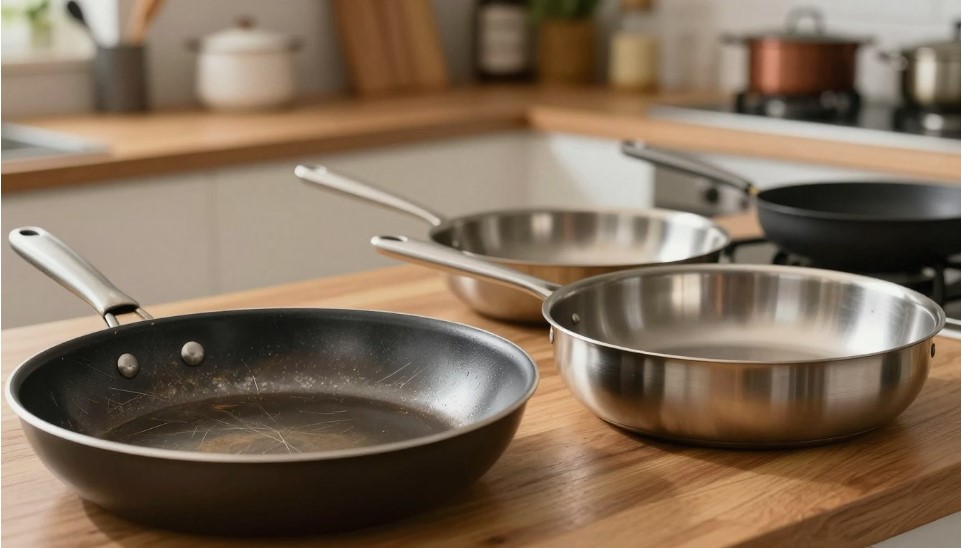
Visible scratches or damage on your nonstick pan mean it’s time for a new one. Scratches can harbor bacteria, posing a health risk. If your pan gets scratched, and you’ve used metal utensils, it’s likely time for a replacement.

Peeling or Flaking Coating
The coating on a nonstick pan is key to its performance. If it starts peeling or flaking, it’s a sign the pan is almost done. Not only is the flaking coating harmful to eat, but it also means the pan’s nonstick abilities are fading.
“The nonstick coating on pans is not just a convenience; it’s also a safety feature. When it starts to degrade, it’s time to replace the pan.”
Discoloration and Dark Spots
Discoloration or dark spots on your nonstick pan can signal aging. While some discoloration might not hurt the pan’s use, it can lead to bigger problems. If your pan looks significantly different or has dark spots, it might be time for a new one, to avoid chemical leaching.
Food Sticking Despite Proper Use
If food starts sticking to your nonstick pan, even when you’re using it right, the coating is wearing off. This can be frustrating and means the pan is not working as it should. At this point, getting a new pan is the best choice to improve your cooking.
| Signs of Wear | Description | Action Required |
|---|---|---|
| Visible Scratches | Scratches on the surface of the pan | Consider replacing the pan |
| Peeling Coating | Nonstick coating is peeling or flaking off | Replace the pan |
| Discoloration | Pan has become discolored or has dark spots | Consider replacement if concerned about safety |
| Food Sticking | Food sticks to the pan despite proper care | Replace the pan for better performance |
The “Is It Safe?” Test for Your Cookware
Deciding when to replace your nonstick pan can be hard. But, there are easy tests to guide you. It’s key to check your cookware often to keep it safe and working well.

The Wobble and Warp Check
If your nonstick pan wobbles or warps on the stovetop, it’s a bad sign. Place the pan on a flat surface and rock it gently. If it wobbles, it might have warped from heat or bad handling. A warped pan can cause uneven cooking and accidents.
The Egg Test for Nonstick Performance
The egg test is a simple way to check your nonstick pan. Crack an egg into the pan and cook it on medium heat. If the egg sticks, the nonstick coating is wearing off. But, if the egg cooks well and slides out easily, your pan is good to go.
Examining Handle Stability and Attachment
A stable handle is important for safe use of your cookware. Check the handle’s attachment by gently pulling on it. If it feels loose or wobbly, the handle might be coming off. A loose handle can cause spills and accidents. Always check the handle and tighten any loose parts.
By doing these simple tests, you can tell if your nonstick pan is safe to use. Regular checks will help you keep cooking safe and fun.
Health Concerns With Aging Nonstick Cookware
Using nonstick pans for a long time can affect our health. It’s important to know the risks of old nonstick pans in the kitchen.

Understanding PFOA and PTFE Risks
Nonstick pans have a layer of PTFE, made with PFOA. PTFE is safe when it’s not damaged. But, when heated too high or damaged, it can release harmful fumes or particles. PFOA has been linked to health problems and is being removed from many products.
Not all nonstick pans are the same. Some makers use safer alternatives instead of PFOA. But, older pans or those from less trusted brands might have these chemicals.
When Scratched Surfaces Become Dangerous
Scratches on nonstick surfaces can increase the risk of chemical release. If the nonstick layer peels off, it can mix with food. While the exact health effects of eating nonstick material are debated, it’s best to avoid it.
To stay safe, replace nonstick pans when they’re badly worn. Look for deep scratches, peeling, or color changes. Regular checks and care can help your pans last longer and stay safe.
Modern Safety Standards in Nonstick Manufacturing
Today, nonstick pans are safer than before. Many are now PFOA-free, and some use ceramic or other safe materials. These changes make nonstick pans safer, as long as they’re used and cared for right.
It’s our job to know about the cookware we use. By understanding the risks of old nonstick pans and taking steps to avoid them, we can enjoy nonstick pans safely.
Factors That Shorten Your Pan’s Life
Many things can make your nonstick pan last less time. Knowing these can help you keep your pan in good shape. This way, you can enjoy your nonstick pan for longer.
High Heat Cooking Habits
Cooking at high heat can harm your nonstick pan. High temperatures can wear down the nonstick coating. This makes your pan less effective.
To prevent damage, cook at medium or low heat. Avoid using high heat to keep your pan and food tasting better.
Metal Utensil Damage
Metal utensils can scratch your nonstick pan. These scratches can make the nonstick coating wear off. This lets food stick to the pan.
It’s best to use silicone, wooden, or plastic utensils. They are gentler on your pan’s surface.

Dishwasher Use and Harsh Cleaning Methods
Using the dishwasher or harsh cleaners can shorten your pan’s life. Dishwashers’ heat and strong detergents can harm the nonstick coating. Hand washing with mild soap and a soft sponge is better.
Improper Storage Techniques
How you store your nonstick pan matters. Stacking pans without protection can scratch and damage them. To avoid this, store pans separately or use pan protectors.
| Factor | Effect on Nonstick Pan | Prevention Method |
|---|---|---|
| High Heat Cooking | Damages nonstick coating | Cook at medium/low heat |
| Metal Utensils | Scratches nonstick surface | Use silicone/wooden utensils |
| Dishwasher Use | Damages nonstick coating | Hand wash with mild soap |
| Improper Storage | Causes scratching and damage | Store pans separately or use pan protectors |
Extending the Life of Your Nonstick Cookware
To get the most out of your nonstick cookware, it’s key to know how to care for it. A few simple habits can make your nonstick pans last longer.

Temperature Control for Longevity
Temperature control is a big part of nonstick pan care. Don’t let your pans get too hot, as it can harm the nonstick layer. Use medium to low heat for most cooking. This keeps your pan in good shape and cooks food evenly.
Utensil Selection and Usage Tips
The tools you use with your nonstick pans matter a lot. Choose silicone, wooden, or plastic utensils, as they are softer on the nonstick surface. Don’t scrape the bottom of the pan with your utensils to avoid scratches.
Hand-Washing Best Practices
Hand-washing is the best way to clean nonstick pans. Use mild soap and a soft sponge. Avoid harsh materials that can damage the nonstick layer. For stubborn stains, soak the pan in warm soapy water first.
Protective Storage Solutions
Storing your pans right is important for their longevity. Keep them in a dry spot. Use pan protectors or separate them with paper towels to prevent scratches. This simple step can greatly extend your nonstick pans’ life.
Alternatives to Traditional Nonstick Pans
We’re looking for better, more durable, and eco-friendly kitchen tools. Nonstick pans have been popular, but they have their downsides. This has sparked interest in other materials.
There are now many options for those wanting to change or add to their cookware. Let’s look at some of the best alternatives.
Cast Iron and Carbon Steel Options
Cast iron and carbon steel pans are very durable and keep heat well. They need seasoning to be nonstick, but they can last a long time. Cast iron is great because it works well on the stovetop and in the oven.
Modern Ceramic Coatings
Ceramic-coated pans are becoming popular as a safer choice than traditional nonstick pans. These coatings are made from silicon dioxide and don’t have PFOA or PTFE. They work well, but how long they last depends on the brand.
Stainless Steel Cooking Techniques
Stainless steel pans are known for being tough and not rusting. They don’t naturally prevent food from sticking, but the right cooking methods can help. Preheating the pan and using enough oil can make a big difference.
Eco-Friendly Nonstick Innovations
The cookware world is always changing, with new eco-friendly nonstick coatings coming out. Some companies are using diamond-infused coatings or advanced ceramics. These promise better performance and are better for the planet.
| Material | Nonstick Performance | Durability | Eco-Friendliness |
|---|---|---|---|
| Cast Iron | Good with seasoning | Excellent | High |
| Ceramic Coating | Good | Variable | Medium to High |
| Stainless Steel | Poor without oil | Excellent | High |

Environmentally Responsible Disposal and Recycling
When we get rid of our old nonstick pans, we should think about the planet. How we throw away our cookware really matters. There are good ways to do it.
Recycling Programs for Cookware
Many companies and stores have recycling programs for cookware. These let people send back their used pans. Then, these pans are recycled or reused. Check if your pan’s maker has such a program.
Here’s a look at different recycling options:
| Program | Description | Acceptance Criteria |
|---|---|---|
| Manufacturer Take-Back | Return old pans to the manufacturer for recycling | Any condition, any brand |
| Retailer Recycling | Drop off old pans at participating retail stores | Nonstick, stainless steel, cast iron |
| Local Recycling Centers | Check with local centers for cookware recycling options | Varies by location |
Creative Repurposing Ideas for Old Pans
If recycling isn’t an option, think outside the box. Old pans can be planters for small plants or herbs. Or, they can be a DIY bird feeder. With some creativity, they can live on in your garden or home.

Choosing these eco-friendly ways to get rid of cookware helps the planet. It reduces waste and lessens our impact on the environment.
Conclusion
Nonstick pans are a great addition to any kitchen. They last longer and work better if you know when to replace them and how to care for them.
Knowing when to replace your nonstick pans is key for health and cooking. Look out for signs like scratches, peeling, or food sticking. This way, you can cook safely and enjoyably.
To keep your nonstick pans in good shape, use the right tools, avoid high heat, and clean them gently. These steps help your pans last longer and work better.
If your nonstick pans aren’t working well anymore, it might be time for new ones. Upgrading not only improves your cooking but also makes sure you’re using safe, healthy cookware.
FAQ of Nonstick Pans: When to Know It’s Time for a Change
How often should I replace my nonstick pans?
How often to replace nonstick pans depends on how you use them and how well you take care of them. A well-kept nonstick pan can last from one to five years. Look for signs like scratches, peeling, or discoloration. If you see these, it’s time for a new pan.
What are the signs that my nonstick pan needs to be replaced?
You should replace your nonstick pan if you see scratches, peeling, or discoloration. If food sticks to the pan, even after cleaning, it’s a sign too. Also, if the handle gets loose or the pan warps, it’s time for a new one.
Can I still use my nonstick pan if it’s scratched?
Minor scratches might not mean you need a new pan right away. But, deep scratches can let harmful chemicals into your food. If your pan is badly scratched, it’s safer to get a new one.
Are there any health risks associated with using old nonstick pans?
Yes, old nonstick pans can be risky, mainly if they have PFOA or PTFE coatings. If these coatings are damaged, they can release harmful chemicals. Even though newer pans use safer coatings, it’s important to check your cookware’s condition.