
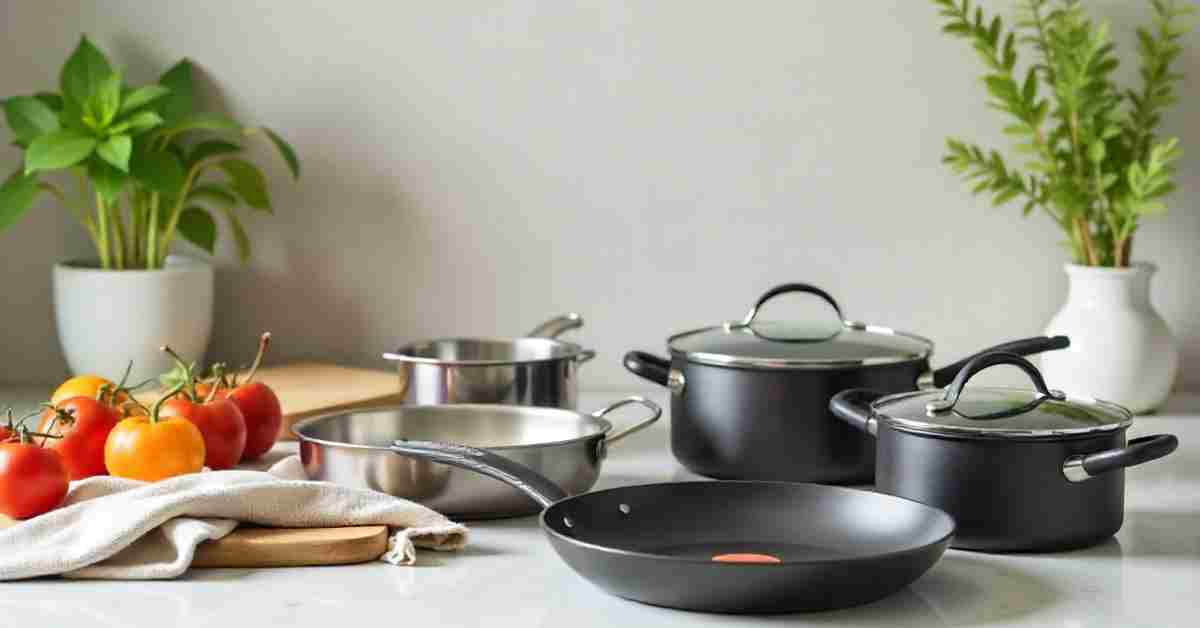
A cookware set typically includes essential pots and pans such as saucepans, frying pans, and a stockpot, often with matching lids. Some sets also include specialty items like a sauté pan or Dutch oven, designed for everyday home cooking and regional kitchen needs.
Figuring out What Comes in a Cookware Set? can feel a bit overwhelming when you’re just starting out in the kitchen. There are so many pieces, and it’s hard to know what you really need. Don’t worry, it’s totally normal to feel this way!
We’ll break it all down in a super simple, step-by-step way. After we get through this, you’ll know exactly what to look for and why. Let’s get cooking and make sense of it all.
Key Takeaways
- Most cookware sets include saucepans, frying pans, and at least one large pot
- Lids are usually included to match each pot or pan
- Larger sets may add sauté pans or specialty cookware
- Designed to cover common cooking tasks in home kitchens
Understanding Essential Cookware Pieces
When you look at cookware sets, you’ll notice a variety of pots and pans.
Each one has a job. Knowing what they are and what they do is the first step to picking the right set. We’ll go over the most common items you’ll find, so you know exactly what you’re getting.
Saucepans
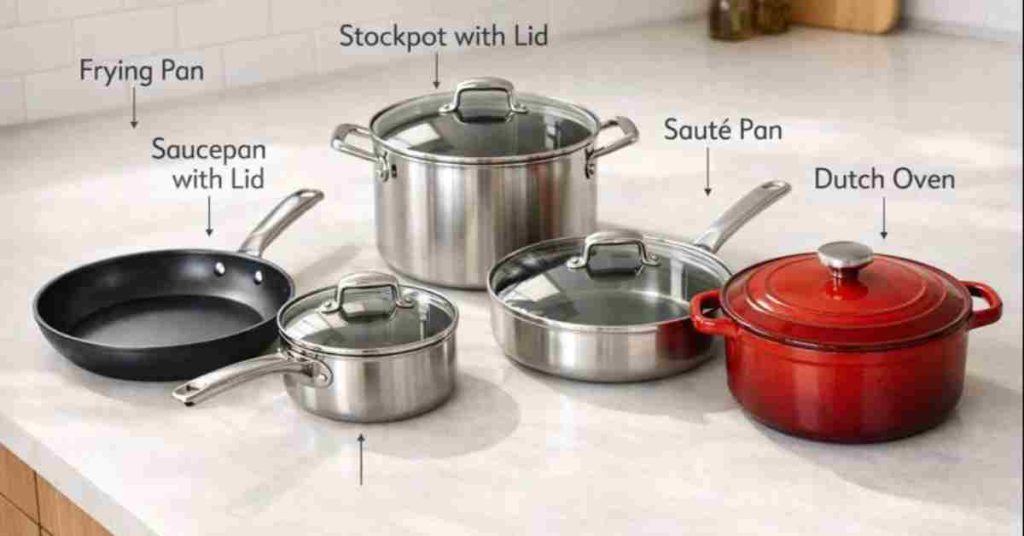
Saucepans are like the workhorses of any kitchen. They’re usually tall with straight sides and a single long handle.
You’ll find them in various sizes, from small ones perfect for melting butter or making a quick sauce, to larger ones great for cooking grains like rice or pasta.
The high sides of a saucepan help prevent liquids from splashing out, which is super handy when you’re simmering sauces or boiling water.
They’re also good for poaching eggs or making stovetop custards. The long handle stays cool on the stovetop, making it easy to carry and stir.
- Purpose: Ideal for boiling liquids, making sauces, simmering, and reheating food.
- Design: Typically has straight, high sides and a long handle.
- Sizes: Commonly available in 1-quart, 2-quart, and 3-quart capacities, with larger sizes also existing.
Stockpots
Stockpots are the giants of the cookware world. They’re deep and wide, with two small loop handles on the sides. These are meant for making large batches of things like soup, broth, stock, or for boiling big items like lobsters or corn on the cob.
Their size is their biggest advantage.
Because they are so big, they can hold a lot of ingredients and liquid without boiling over.
This makes them perfect for slow-cooking or making large quantities of food for a crowd. If you plan on making homemade stocks or broths, a good stockpot is a must-have.
- Purpose: Best for large-volume cooking like soups, stocks, stews, and boiling pasta or corn.
- Design: Deep and wide with two side handles.
- Sizes: Usually range from 6 quarts up to 20 quarts or more.
Skillets (Frying Pans)
Skillets, also known as frying pans, are characterized by their wide, flat bottoms and gently sloped sides. They have one long handle. These are your go-to for searing meats, sautéing vegetables, and frying foods.
The broad surface area allows for even heat distribution and good browning.
The sloped sides are designed to make it easy to flip food and slide it out onto a plate.
You’ll often find skillets in various diameters, like 8-inch, 10-inch, and 12-inch. A good skillet can be used for everything from cooking a perfect fried egg to making a quick stir-fry.
- Purpose: Excellent for frying, searing, sautéing, and browning food.
- Design: Flat bottom with shallow, sloped sides and a long handle.
- Sizes: Common sizes include 8, 10, and 12 inches in diameter.
Sauté Pans
Sauté pans look a bit like skillets but have straight, taller sides. They usually come with one long handle and sometimes a helper handle on the opposite side for easier lifting when full.
These are great for cooking foods that need to be tossed around a lot, like vegetables in a stir-fry, or for searing and then finishing a dish in the oven.
The higher sides help keep food contained when you’re flipping or tossing it, preventing spills.
They are also excellent for making pan sauces because the straight sides allow you to reduce liquids more effectively without losing too much to evaporation.
They offer a good balance between a skillet and a saucepan.
- Purpose: Versatile for sautéing, searing, and making pan sauces.
- Design: Flat bottom with straight, taller sides, a long handle, and sometimes a helper handle.
- Sizes: Typically range from 10 to 12 inches in diameter.
Dutch Ovens
Dutch ovens are heavy, deep pots with tight-fitting lids and two short loop handles. They are incredibly versatile and can be used on the stovetop or in the oven. They’re perfect for braising meats, making stews, baking bread, and slow-cooking dishes.
Their thick walls and tight lids allow for even heat distribution and moisture retention, which is key for tenderizing meats and developing deep flavors.
Many modern Dutch ovens are made from enameled cast iron, which makes them non-stick and easy to clean compared to traditional cast iron. They are a staple for comfort food cooking.
- Purpose: Ideal for braising, stewing, soups, baking bread, and oven-to-stovetop cooking.
- Design: Heavy, deep pot with a tight-fitting lid and two side handles.
- Materials: Often made of enameled cast iron, but also available in stainless steel or aluminum.
Materials Matter: What Your Cookware is Made Of
The material of your cookware significantly impacts how it cooks, how it lasts, and how easy it is to clean.
Different materials have different properties that make them better suited for certain tasks or cooking styles. Let’s explore some of the most common materials you’ll encounter.
Stainless Steel
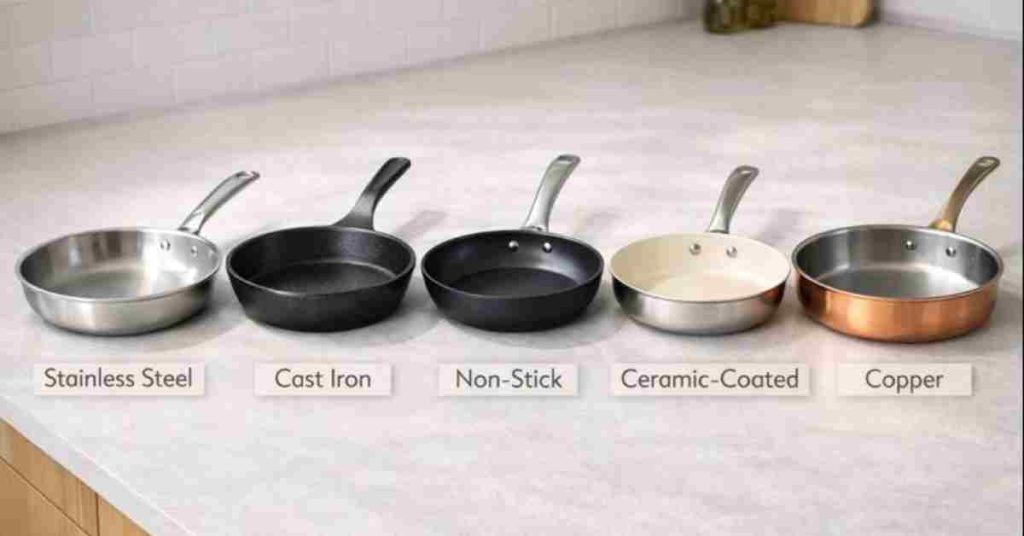
Stainless steel is a popular choice for cookware because it’s durable, non-reactive, and relatively easy to care for. It doesn’t transfer metallic tastes to your food, making it great for acidic ingredients like tomatoes or wine. However, plain stainless steel can sometimes have hot spots, meaning the heat isn’t perfectly even across the surface.
To combat this, many stainless steel pots and pans have a core of aluminum or copper sandwiched between layers of steel.
This core helps to distribute heat more evenly, preventing scorching and ensuring consistent cooking. It’s a fantastic all-around material for everyday cooking.
- Pros: Durable, non-reactive, easy to clean, won’t rust or chip.
- Cons: Can have uneven heat distribution without a core (like aluminum or copper).
- Best for: Everyday cooking, boiling, simmering, searing, and sauces.
- Care: Generally dishwasher safe, though hand washing can extend its life. Avoid abrasive cleaners.
Nonstick Cookware
Nonstick cookware has a special coating that prevents food from sticking.
This makes cooking with less oil or butter possible and cleaning up a breeze. It’s especially great for delicate foods like eggs, fish, or pancakes that tend to break apart if they stick.
The nonstick surface is usually made of a material like PTFE (polytetrafluoroethylene), often known by brand names like Teflon.
It’s important to note that nonstick coatings can wear out over time, especially if not cared for properly. Overheating can also damage the coating.
Always use non-metal utensils to protect the surface.
- Pros: Food releases easily, requires less oil, simple cleanup.
- Cons: Coating can scratch or wear out, may not be suitable for very high heat, often needs replacement sooner.
- Best for: Eggs, fish, pancakes, delicate foods, low-fat cooking.
- Care: Use low to medium heat, avoid metal utensils, hand wash gently with a soft sponge.
Cast Iron
Cast iron cookware is famous for its incredible durability and heat retention. Once it gets hot, it stays hot, which is perfect for searing steaks or frying chicken to a perfect crisp.
It also develops a natural nonstick surface over time through a process called “seasoning,” which involves baking oil into the metal.
Cast iron can rust if not cared for properly, so it should never be put in the dishwasher and must be thoroughly dried after washing. It’s also heavier than other cookware materials.
While traditional cast iron is great, enameled cast iron offers many of the same benefits but is easier to clean and more resistant to rust and chipping.
- Pros: Excellent heat retention, develops a natural nonstick surface, lasts a lifetime if cared for.
- Cons: Heavy, requires seasoning and specific care to prevent rust, can crack if dropped.
- Best for: Searing, frying, baking, dishes that need consistent, high heat.
- Care: Hand wash, dry immediately, and apply a thin layer of oil.
Copper Cookware
Copper cookware is prized by professional chefs for its exceptional heat conductivity. It heats up and cools down very quickly and evenly, giving you incredible control over your cooking temperature.
This responsiveness is fantastic for delicate sauces or dishes that require precise heat management.
Pure copper cookware is often lined with stainless steel or tin on the inside to prevent the copper from reacting with food.
While it offers superior performance, copper is generally the most expensive option and requires regular polishing to maintain its shine. It’s a premium choice for serious cooks.
- Pros: Superior heat conductivity and responsiveness, excellent temperature control.
- Cons: Expensive, requires regular polishing, can react with food if not lined.
- Best for: Professional chefs, high-end home cooks, delicate sauces, precise temperature cooking.
- Care: Hand wash, polish with a copper cleaner to maintain shine.
Aluminum Cookware
Aluminum is a lightweight and affordable material that conducts heat well.
It’s often used as a core material in stainless steel cookware to improve heat distribution. Pure aluminum cookware can sometimes react with acidic foods, giving them a metallic taste, and can also dent or scratch easily.
Anodized aluminum cookware is treated to make it harder, more durable, and less reactive.
It’s a good middle-ground option, offering better heat conductivity than plain stainless steel without the high cost of copper. It’s a solid choice for everyday use.
- Pros: Lightweight, heats up quickly, affordable.
- Cons: Can react with acidic foods, prone to scratching and denting if not anodized.
- Best for: Everyday cooking, general-purpose pots and pans.
- Care: Varies depending on whether it’s anodized or plain; generally hand wash.
What Comes in a Cookware Set? Common Configurations
When you buy a cookware set, you’re getting a curated collection of pots and pans, usually designed to cover most of your basic cooking needs. These sets aim to provide a good balance of sizes and types of cookware.
Understanding common set configurations can help you choose one that suits your lifestyle.
Starter Sets
Starter sets are perfect for people who are new to cooking, live alone, or have a smaller kitchen.
They typically include the absolute essentials. You might find a small saucepan, a medium saucepan, a skillet, and maybe a small pot.
These sets are designed to be budget-friendly and cover the most frequent cooking tasks.
They’re a great way to begin building your kitchen collection without being overwhelmed by too many pieces you might not use. They focus on versatility for basic meals.
- Typical pieces: 1-2 saucepans (e.g., 1.5 qt, 2 qt), 1 skillet (e.g., 8 or 10 inch), 1 stockpot (e.g., 4 or 6 qt).
- Best for: Singles, couples, students, first-time cooks, small kitchens.
- Focus: Essential pieces for basic meal preparation.
Mid-Range Sets
Mid-range sets offer a more comprehensive collection, suitable for couples or small families who cook regularly.
They expand on the starter set by including more sizes of saucepans and skillets, and perhaps a sauté pan or a Dutch oven.
These sets provide more flexibility for preparing a wider variety of dishes. You can cook more complex meals, prepare larger portions, or experiment with different cooking techniques.
They strike a good balance between variety and practicality.
- Typical pieces: 2-3 saucepans (e.g., 1.5 qt, 2 qt, 3 qt), 1-2 skillets (e.g., 8 inch, 10 inch), 1 sauté pan, 1 stockpot (e.g., 6 or 8 qt).
- Best for: Couples, small families, home cooks who prepare meals several times a week.
- Focus: Increased versatility for a wider range of recipes.
Complete or Deluxe Sets
Complete or deluxe sets are for serious home cooks or larger families.
They include a wide array of pots and pans in various sizes, often incorporating specialized items like a chef’s pan, Dutch oven, grill pan, and sometimes even lids for multiple pot sizes.
These sets aim to equip you for almost any culinary task.
They allow for simultaneous cooking of multiple components of a meal and support advanced cooking techniques.
If you love to cook and entertain, a deluxe set can be a valuable investment.
- Typical pieces: Multiple saucepans, multiple skillets, sauté pan, Dutch oven, stockpot, chef’s pan, and sometimes additional specialty items.
- Best for: Large families, avid home cooks, entertainers, those who want a complete collection.
- Focus: Maximum variety, capability, and efficiency for all cooking needs.
Cookware Sets: Pros and Cons Compared to Individual Pieces
Buying a cookware set can be a great way to get started, but it’s also worth considering if buying individual pieces might be a better fit for your needs. Each approach has its own advantages and disadvantages.
Advantages of Buying a Cookware Set
One of the biggest benefits of buying a set is the cost savings.
Manufacturers often price sets to be more affordable than buying each piece separately. It’s also a convenient way to get a collection of matching cookware that looks cohesive in your kitchen.
Sets are designed with a purpose: to give you a good starting point for most cooking tasks.
This means you get a variety of essential sizes and types right away, so you don’t have to figure out what individual pieces you need first. It simplifies the buying process.
- Cost-effective: Usually cheaper than buying individual pots and pans.
- Convenience: All pieces match and cover a range of basic cooking needs.
- Curated Selection: Provides a balanced assortment of common kitchen tools.
- Aesthetics: Creates a uniform and organized look in your kitchen.
Disadvantages of Buying a Cookware Set
The main drawback of a set is that you might end up with pieces you never use. For example, a set might include a very small saucepan that you don’t need, or perhaps you already own a favorite skillet and don’t need another one. This can lead to wasted money and clutter.
Another issue is that not all pieces in a set might be made of the best material for their intended use.
A set might feature all stainless steel, but you might prefer nonstick for eggs or cast iron for searing. You have less control over the specific materials and sizes of each item.
- Unused Items: You might get pieces you don’t need or won’t use often.
- Less Customization: You can’t pick the exact material or size for each piece.
- Lower Quality Components: Some pieces in a less expensive set might be of lower quality.
- Redundancy: If you already own some cookware, a set might give you duplicates.
Advantages of Buying Individual Pieces
When you buy cookware piece by piece, you have complete control. You can select exactly the size, material, and brand that you prefer for each specific need. If you know you fry eggs every morning, you can invest in a top-notch 8-inch nonstick skillet.
This approach allows you to build a collection perfectly suited to your cooking habits and preferences. You can gradually add pieces as your needs grow or as you discover new cooking techniques. It also means you avoid paying for items you’ll never use.
- Full Customization: Choose the exact size, material, and brand for each piece.
- Targeted Purchases: Invest in high-quality pieces for your most-used tasks.
- Gradual Acquisition: Build your collection over time as needed.
- Avoids Unused Items: Only buy what you truly need and will use.
Disadvantages of Buying Individual Pieces
Buying cookware individually can be more expensive overall, especially if you’re starting from scratch.
Each piece will likely cost more than it would in a comparable set. It also requires more research and decision-making upfront to know what you need.
The biggest challenge is often aesthetics. Individual pieces from different brands or materials won’t match, which can lead to a less organized or visually appealing kitchen.
You might also find yourself buying pieces that aren’t as well-balanced in terms of size and function compared to a well-designed set.
- Higher Cost: Individual pieces are generally more expensive than those in a set.
- Time-Consuming: Requires more research and decision-making.
- Inconsistent Appearance: Pieces may not match, leading to a less cohesive look.
- Potential for Gaps: You might overlook essential pieces if not careful.
What Else Comes with Cookware Sets? Essential Accessories
Beyond the pots and pans themselves, many cookware sets include helpful accessories that can make your cooking experience even better. These extras can range from practical kitchen tools to helpful covers.
Lids
Lids are crucial for efficient cooking. They trap heat and moisture, allowing food to cook more evenly and quickly, especially when simmering or braising. They also help prevent splatters and keep food warm.
Most sets will include lids that fit the pots and pans. Some high-end sets might feature universal lids or lids made of tempered glass so you can see the food cooking.
- Function: Traps heat and moisture for even cooking, prevents splatters, keeps food warm.
- Types: Can be made of metal or tempered glass, some are vented.
- Importance: Essential for simmering, braising, and retaining heat.
Utensils
Some cookware sets come with a basic set of kitchen utensils. These might include items like a ladle, a slotted spoon, a solid spoon, a whisk, or a spatula. These are often made from materials like nylon, silicone, or stainless steel to be safe for use with the cookware, especially nonstick surfaces.
While the utensils included in a set might be functional, they are often considered entry-level.
Many cooks prefer to invest in higher-quality, specialized utensils that better suit their specific needs and preferences. However, for a beginner, these can be a convenient starting point.
- Examples: Spoons, spatulas, ladles, whisks.
- Materials: Often nylon, silicone, or stainless steel.
- Benefit: Provides essential tools for immediate use with the new cookware.
Steamer Inserts
A steamer insert is a perforated bowl that fits inside a larger pot, like a stockpot or a saucepan. It allows you to steam vegetables, fish, or dumplings using the steam from boiling water below. This is a healthy way to cook, as it preserves nutrients and flavors.
Having a steamer insert included can add significant versatility to your cookware, enabling you to prepare a wider range of healthy meals.
It’s a great addition for those who enjoy steaming their food. It often fits snugly into one of the larger pots in the set.
- Purpose: Allows for steaming foods using the pot below.
- Benefits: Healthy cooking method, preserves nutrients and flavor.
- Compatibility: Designed to fit specific pots within the set.
Colanders or Strainers
Occasionally, a cookware set might include a colander or a strainer. A colander is a bowl with holes used to drain liquids from foods like pasta or washed vegetables. A strainer is typically a finer mesh tool used for sifting dry ingredients or draining liquids from sauces.
These are incredibly useful tools for everyday cooking. If your set includes one, it means you’re getting a few extra essentials that are often purchased separately.
They complement the pots and pans by helping with draining and rinsing tasks.
- Function: Draining liquids from pasta, vegetables, or rinsing ingredients.
- Types: Colanders (larger holes) and strainers (finer mesh).
- Convenience: Adds useful draining tools to your collection.
How to Choose the Right Cookware Set for You
Deciding What Comes in a Cookware Set? is just the first step. The most important part is choosing a set that actually fits your life and how you like to cook. Think about your kitchen, your cooking habits, and your budget.
Consider Your Cooking Habits
Do you cook elaborate meals with many steps, or are you more of a simple stovetop cook? If you love to bake and braise, a set with a Dutch oven or oven-safe pans is important.
If you mainly make quick weeknight dinners, a set with a good variety of skillets and saucepans might be better.
Think about the types of foods you prepare most often. Do you fry a lot of eggs? You’ll want good nonstick skillets.
Do you make big pots of soup? A larger stockpot is essential. Matching the set to your typical cooking will ensure you get the most use out of it.
- Frequency: How often do you cook? Daily, a few times a week, or occasionally?
- Types of Dishes: Do you bake, braise, sauté, fry, or boil frequently?
- Portion Sizes: Do you cook for one, two, or a large family?
- Culinary Exploration: Are you trying new recipes often, or sticking to favorites?
Evaluate Your Kitchen Space
The size of your kitchen and your storage capacity are key factors.
A large, comprehensive set might be great in theory, but if you have limited cabinet space, it could lead to clutter. Measure your cabinets and drawers to get an idea of what will fit comfortably.
Some cookware is stackable, which can save a lot of space.
Also, consider if you have room for a separate pot rack or wall storage. Choosing a set that’s a good fit for your available space will make cooking and organization much easier.
- Cabinet Space: Measure the height, width, and depth of your cabinets.
- Storage Solutions: Do you have room for pot racks or wall hooks?
- Stackability: Look for sets designed to nest or stack efficiently.
- Countertop Space: Consider how much cookware you leave out or use frequently.
Set a Budget
Cookware prices can range from very affordable to extremely expensive. Determine how much you’re willing to spend before you start shopping.
Remember that higher prices often reflect better materials, construction, and durability.
It’s often better to invest in a good quality set that will last for many years rather than buying a cheaper set that needs frequent
- Price Range: Determine a realistic budget for your purchase.
- Value vs. Cost: Consider the lifespan and quality for the price.
- Long-Term Investment: High-quality cookware can last for decades.
- Prioritize: If budget is tight, focus on essential pieces rather than extensive sets.
Consider Material and Durability
As we discussed, different materials have different pros and cons.
Think about which materials best suit your cooking style and maintenance preferences. Stainless steel is durable and low-maintenance, while cast iron offers superior heat retention but requires more care.
Nonstick is great for ease of use but has a limited lifespan.
Durability is also important. Look for sturdy handles that are well-attached, heavy bases for stability and even heating, and lids that fit snugly.
Reading reviews can give you insights into how well a set holds up over time and with regular use.
- Material Needs: What properties are most important to you (e.g., nonstick, even heating, heat retention)?
- Handle Attachment: Riveted handles are generally more durable than those that are screwed on.
- Base Construction: Heavy, clad bases (layers of metal) offer the best heat distribution.
- Warranty: A good warranty can indicate the manufacturer’s confidence in the product’s durability.
Real-Life Cookware Scenarios
Let’s see how different cookware sets and materials perform in common kitchen situations. These examples can help you visualize the practical differences.
Scenario 1: Making Spaghetti Sauce
You’re making a big pot of spaghetti sauce from scratch. You start by sautéing onions and garlic, then add tomatoes, herbs, and let it simmer for a couple of hours. For this, a large saucepan or a Dutch oven is ideal.
A stainless steel saucepan with a tight-fitting lid is excellent here.
The straight sides help with simmering and reducing the sauce, and the lid keeps the flavors contained. If you’re making a very large batch or want to finish it in the oven, a Dutch oven made of enameled cast iron would be perfect.
Its even heating ensures the sauce cooks through without scorching, and its oven-safe nature gives you flexibility.
- Start by sautéing aromatics in oil in a 3-quart saucepan or a 5-quart Dutch oven.
- Add canned tomatoes, spices, and simmer.
- Use a tight-fitting lid to prevent splattering and maintain moisture.
- Simmer for at least 1-2 hours for flavors to meld.
Scenario 2: Frying Eggs for Breakfast
It’s Saturday morning, and you want to make perfect sunny-side-up eggs. You need a pan that will cook them evenly without sticking, so you can easily slide them onto your plate.
This is where a good nonstick skillet shines.
An 8-inch or 10-inch nonstick pan is ideal. The nonstick surface ensures the eggs release cleanly, and the sloped sides make it easy to get your spatula underneath.
Using medium-low heat is key to prevent the nonstick coating from overheating and to cook the eggs gently.
- Preheat a nonstick skillet over medium-low heat.
- Add a small amount of butter or oil.
- Crack eggs directly into the pan.
- Cook until whites are set and yolks are still runny.
- Slide the eggs out onto a plate using a non-metal spatula.
Scenario 3: Searing a Steak
You’re ready to cook a thick, juicy steak. For a perfect sear, you need a pan that can get very hot and maintain that heat to create a beautiful, caramelized crust.
A cast iron skillet is the undisputed champion for searing steaks.
It heats up incredibly well and retains that heat consistently, giving you that sought-after crust. You’ll want to preheat the cast iron thoroughly before adding the steak.
If you don’t have cast iron, a heavy-bottomed stainless steel skillet with an aluminum or copper core will also perform well, though it might not achieve the same level of crust.
- Preheat a cast iron skillet over high heat for several minutes.
- Add a high-smoke-point oil like canola or avocado oil.
- Carefully place the seasoned steak in the hot pan.
- Sear for 2-4 minutes per side, depending on desired doneness.
- Transfer the steak to a plate to rest before slicing.
Statistics on Cookware Purchasing
Understanding consumer habits can offer insight into the market for cookware. For instance, research indicates a growing interest in cookware that is both durable and easy to maintain.
A recent survey found that 72% of home cooks consider ease of cleaning a top priority when purchasing new cookware. This highlights the appeal of nonstick surfaces and dishwasher-safe materials.
Another report indicated that sales of stainless steel cookware have steadily increased, making up approximately 45% of the cookware market share.
This reflects its perceived balance of durability, performance, and value for everyday use.
Frequently Asked Questions of What Comes In A Cookware Set?
What are the most common sizes of saucepans in a set?
The most common sizes for saucepans in a set are typically 1.5-quart, 2-quart, and 3-quart. Larger sets might also include a 4-quart saucepan.
Is it always cheaper to buy a cookware set?
Generally, yes. Buying a set is usually more cost-effective than purchasing each pot and pan individually. However, if you only need a few specific pieces, buying them individually might be more economical than buying a large set you won’t fully use.
Can I put all my cookware in the dishwasher?
Not all cookware is dishwasher safe. Stainless steel and enameled cast iron are often dishwasher safe, but nonstick cookware, cast iron, and copper cookware generally require hand washing to preserve their surfaces and coatings.
How many pieces are usually in a basic cookware set?
A basic or starter cookware set typically contains between 7 and 10 pieces. This usually includes a few saucepans, a skillet, and a stockpot.
What is the difference between a skillet and a sauté pan?
A skillet typically has sloped sides, making it easy to flip food, while a sauté pan has straight, taller sides, which are better for containing food when tossed or for reducing liquids.
Final Thoughts
When you’re looking into What Comes in a Cookware Set?, it’s about finding the right tools to make your time in the kitchen enjoyable and productive.
You’ve learned about the different types of pots and pans, like saucepans for simmering and skillets for frying, and why materials such as stainless steel, nonstick, and cast iron behave differently. Understanding these basics helps you pick cookware that truly works for you.
Remember that sets offer convenience and savings, but building a collection piece by piece gives you ultimate control over your choices. Consider how often you cook, what you like to make, and how much space you have.
Setting a budget early on can also guide you toward sensible options. Don’t be afraid to start with a basic set and add to it over time as your cooking adventures grow.
The goal is to have cookware that inspires you to create delicious meals, whatever your skill level or kitchen size. Go ahead and start building your perfect collection!